



- Home>
- Ai Powered Medication Calling System

32% Medication Adherence Lift with an AI Voice Calling System
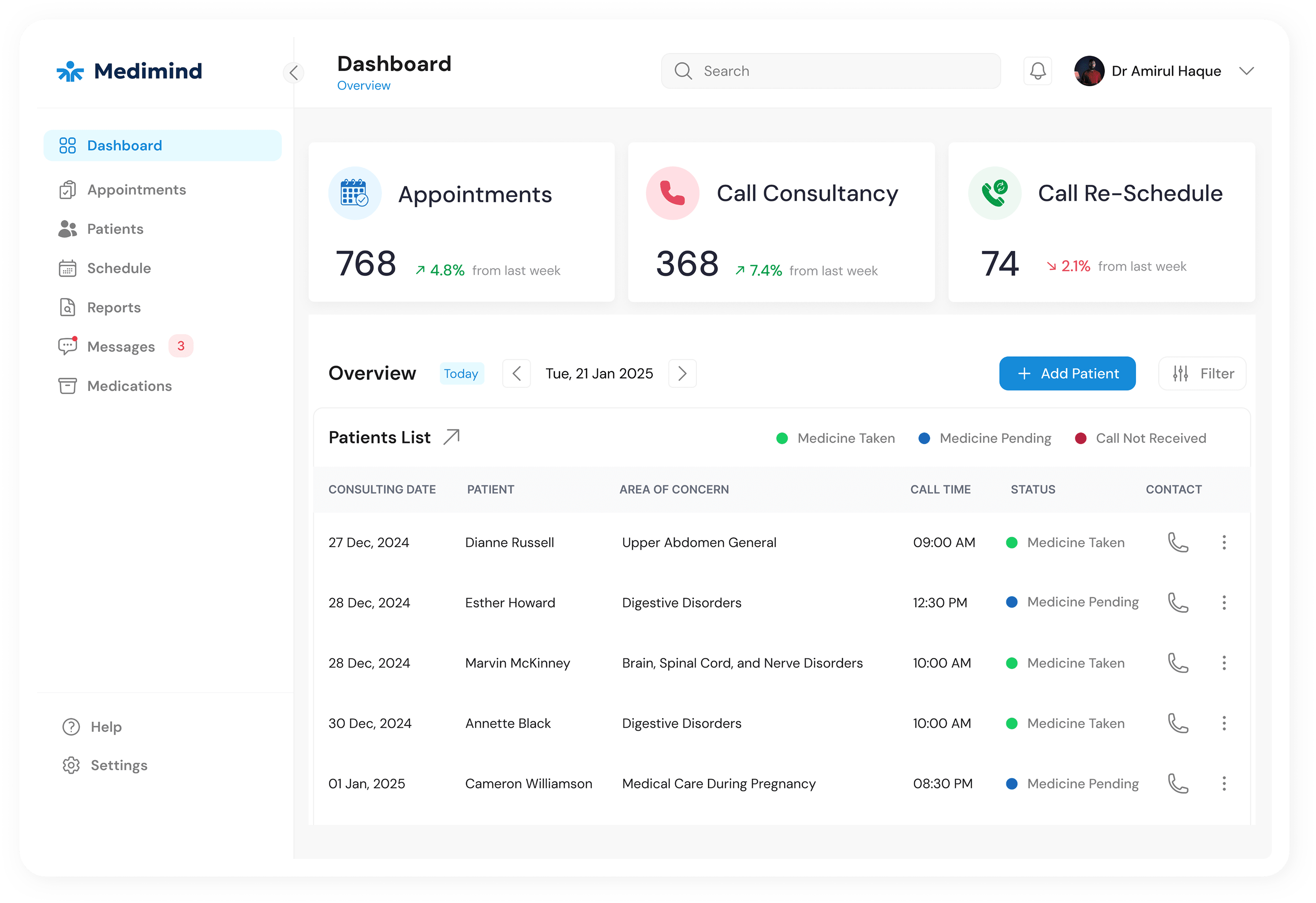
An AI voice calling system for medication adherence built by Bitontree delivered a 32% boost in medication adherence for Brookline Home Healthcare Network, a U.S. home healthcare and elder care provider, with 2.5x higher patient engagement and a 40% reduction in manual nursing workload, while keeping every interaction HIPAA-aligned and scaling across multiple regions without adding clinical staff.
Services Used:
Team:
3 AI engineers + 1 voice AI specialist + 1 PM
Location: USA
USA
Industry:Healthcare
Project Type:AI Voice Calling System
Duration:18 weeks
Services Used:AI Development , AI Agent Development
Team:3 AI engineers + 1 voice AI specialist + 1 PM
About The Client
Brookline Home Healthcare Network is a U.S.-based home healthcare and elder care provider serving elderly patients and individuals with chronic conditions across multiple regions. Their care delivery model spans a broad network of nursing staff, home visit coordinators, and partner care facilities. With a focus on long-term patient wellness, the client manages thousands of medication schedules daily for patients prone to missing doses due to chronic illness, age-related cognitive decline, or general forgetfulness.
Brookline needed an AI voice calling system for medication adherence that could reach patients at the right time, confirm intake, handle delays, and scale across their regional network without adding clinical staff or compromising HIPAA compliance.
The Challenge: Where Manual Medication Reminders Were Breaking Down
Brookline's medication adherence workflow had four operational gaps that cost both patients and clinical staff time.
Low Patient Adherence on Chronic Medications
Many patients forgot to take prescribed medications, especially those with chronic or long-term conditions. Roughly 50% of patients with chronic illness in developed countries do not take medications as prescribed - a baseline Brookline saw mirrored across their elder care population.
Manual Reminder Calls Were Unscalable and Mistimed
The traditional approach relied on nursing staff making manual reminder calls. Calls were frequently mistimed because they had to be batched into available staff windows rather than aligned to each patient's prescribed dosing schedule. Scaling outreach meant hiring more clinical staff.
No Centralized Adherence Tracking
There was no single system tracking whether patients actually took their medications. Adherence data lived in paper logs, partial digital records, and verbal handoffs between nursing staff. Compliance trends were invisible until clinical issues surfaced downstream.
Reminders Were Generic, Not Personalized
Existing reminders followed a generic script regardless of patient schedule, language preference, or cognitive condition. Patients who missed a dose got the same nudge as patients who never missed one. The lack of personalization undermined engagement, particularly for elderly patients who needed contextual, conversational reminders.
What Was at Stake
Dose gaps in chronic and elder care patients drive hospital readmissions, emergency room visits, and avoidable disease progression. Medication non-adherence is a leading contributor to preventable hospitalizations among elderly patients. For Brookline, every missed dose was a clinical risk and an avoidable cost - and the manual reminder workflow could not scale to address it.
The Solution: AI Voice Calls at Every Prescribed Dose
Bitontree operated as an embedded AI engineering team alongside Brookline's clinical operations group, building an AI voice calling system that reaches patients at every prescribed dose. The system places scheduled calls, confirms in natural conversation whether each dose was taken, captures delays and books precise follow-up calls, escalates missed doses to clinical staff, and syncs adherence data back to the care platform in real time. This case anchors our AI agent development practice and our broader healthcare AI work.
Architecture Decisions
Per-dose call scheduling
The system places automated voice calls timed to each patient's prescribed dose schedule, reading the regimen from the care platform and adapting call timing to the individual instead of sending one generic reminder to everyone.
HIPAA-aligned data handling
Encrypted data in transit and at rest, role-based access controls, automatic PII detection, complete audit trails for every patient interaction, and signed Business Associate Agreements (BAAs) across the vendor chain - aligned with the HHS HIPAA Security Rule administrative, physical, and technical safeguards.
Multilingual NLP layer
Patient interactions across multiple languages without human translator involvement. Patients converse in their preferred language; the system processes intent and routes accordingly.
Smart delay and follow-up handling
When a patient says they will take a dose later, the system captures the exact delay and books a precise follow-up call (for example, two hours afterward), so confirmations are not dropped and clinical staff do not need to reschedule manually.
Escalation to clinical staff
Missed doses and at-risk adherence patterns are flagged to nurses and home-visit coordinators with the full call context, so the care team can intervene directly with patients who need attention instead of chasing every patient manually.
Core Features We Built

AI-Powered Medication Caller
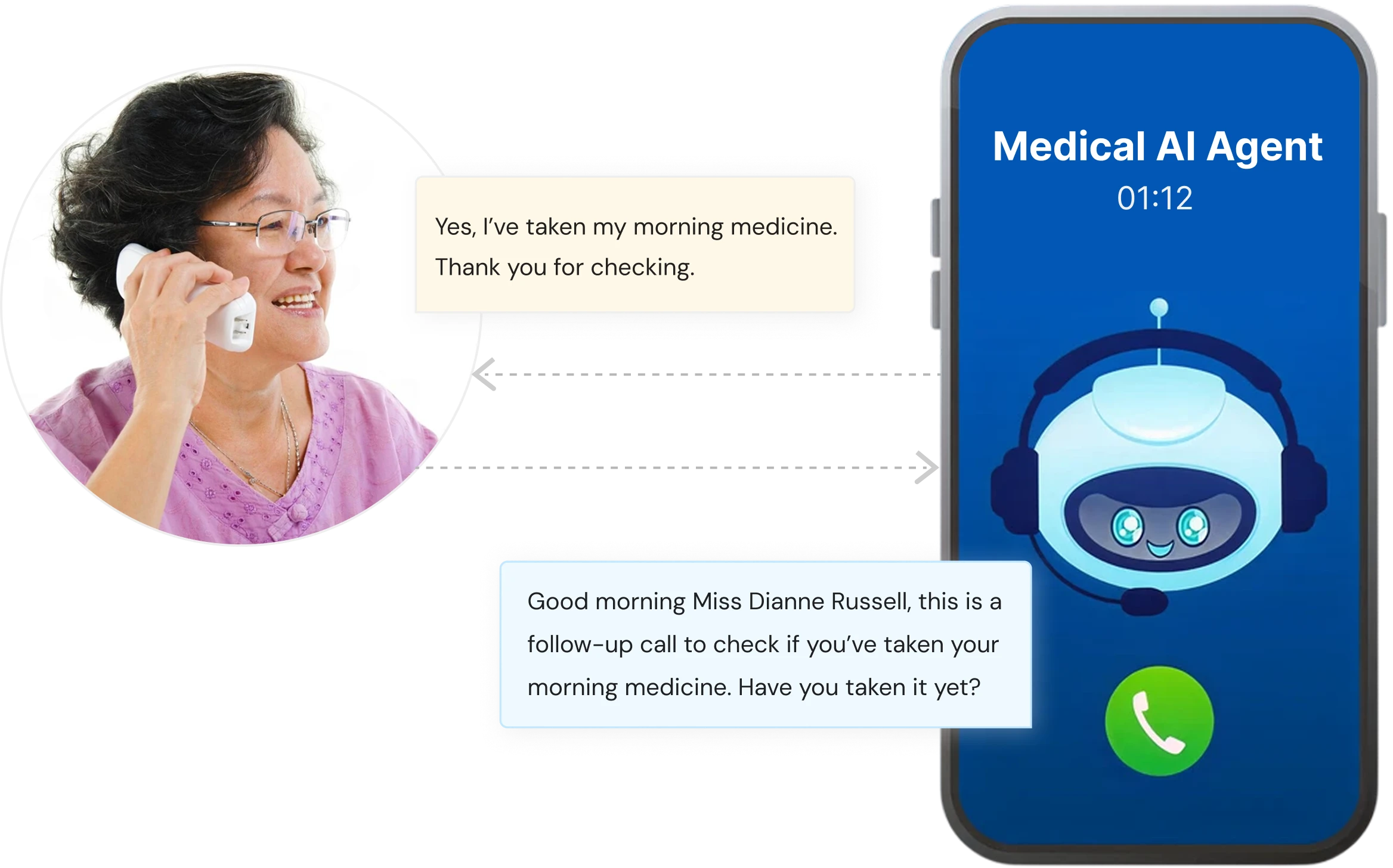
Initiates intelligent voice calls at doctor-prescribed times, simulating natural conversation to confirm medication intake and handle patient responses in real time. The voice agent recognizes intake confirmations, scheduled delays, refusals, and confusion, and adapts the conversation accordingly.
Smart Delay and Follow-Up Handler
Captures patient-specified delay durations and schedules precise follow-up calls automatically. If a patient says 'I'll take it in two hours,' the system books a follow-up exactly two hours later - no missed confirmations, no manual scheduling work for clinical staff.
Centralized Adherence Dashboard
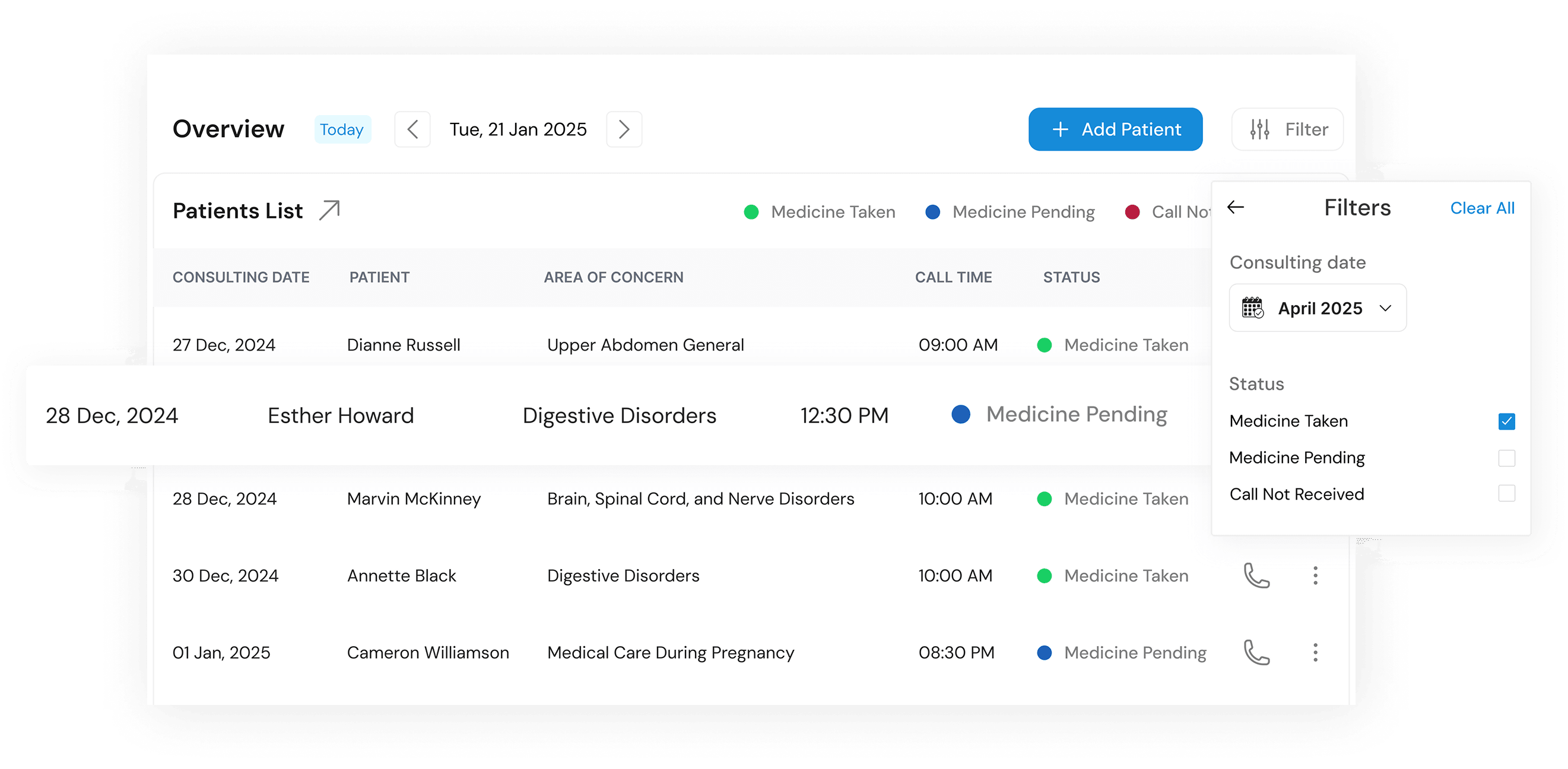
A unified, role-based view of patient responses, intake patterns, pending follow-ups, and non-compliance alerts - filterable by region, status, and care provider. Clinical supervisors see compliance trends across the entire network in a single interface.
Real-Time Adherence Logger
Every call outcome logs to a central compliance system the moment it happens. Provider visibility is instant rather than waiting for end-of-shift handoffs. Clinical staff intervene on at-risk patients within hours rather than days.
Dynamic Reminder Loop Engine
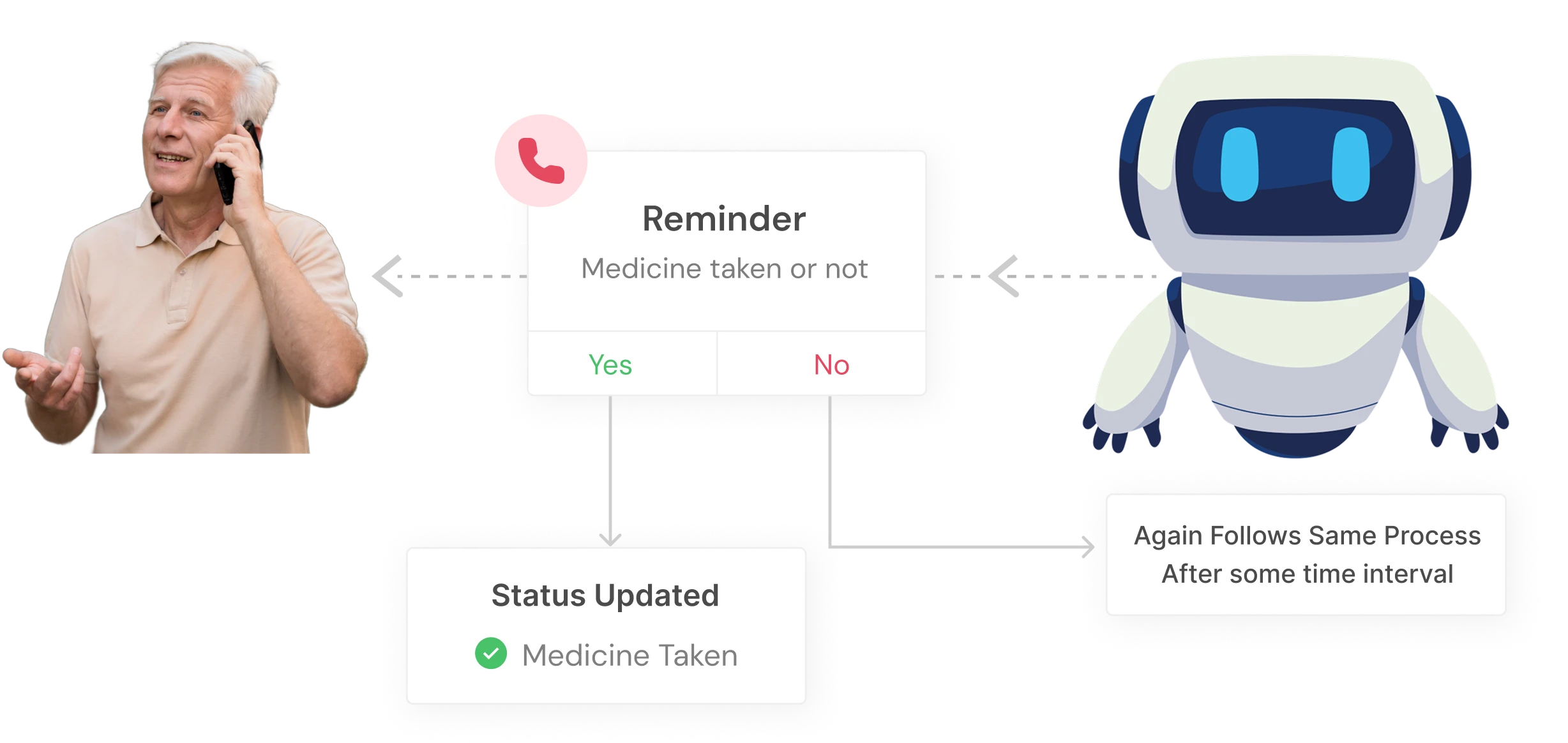
Continuously re-engages patients with missed or postponed doses until intake is confirmed. Reduces the risk of dose gaps in chronic and elder care, where every missed dose compounds clinical risk.
Auto-Generated Compliance Reports
Scheduled reports on medication adherence trends across patient cohorts, enabling clinical leadership to identify regional patterns, at-risk segments, and intervention opportunities. Reports align with the data needs of care quality reviews and regulatory audits.
Manual Reminder Calls vs AI Voice Calling System
| Dimension | Manual Reminder Calls | AI Voice Calling System |
|---|---|---|
| Outreach scale | Limited by clinical staff hours | Scales across regions without added staff |
| Call timing precision | Batched into staff availability windows | Doctor-prescribed time, every dose |
| Patient engagement | Inconsistent and generic | 2.5x increase, conversational |
| Delay and follow-up handling | Manual rescheduling | Auto-scheduled follow-up loops |
| Adherence tracking | Paper logs and verbal handoffs | Real-time logged and reported |
| HIPAA audit trail | Sparse, system-dependent | Complete per-call audit log |
| Cost to scale | Linear (more patients = more staff) | Flat (scales with infrastructure) |
The Result
After deploying the AI voice calling system for medication adherence, Brookline saw measurable improvements across adherence rates, patient engagement, clinical workload, and operational scale. Each metric below is paired with its pre-deployment baseline.
32%
Medication Adherence Lift
2.5x
Patient Engagement Increase
40%
Reduction in Manual Nursing Workload
5x
Outreach Scalability Without Headcount Growth
Technologies Used
The system was engineered using production-proven voice AI and integration technologies selected for accuracy, latency, and HIPAA-aligned compliance requirements.





What Our Clients Say

Bitontree built our medication adherence calling system in under five months, and the reduction in no-doses alone has paid for the engagement multiple times over in the first year. The voice agent reaches patients at the exact prescribed dosing time, handles delays without escalating to our nursing staff, and gives us real-time adherence visibility we never had before. The HIPAA-aligned architecture was non-negotiable for us and was built in from day one.
Luke HarringtonDirector of Clinical Operations
Looking For More Case Studies?
Don’t just take our word for it - our track record reflects our expertise and success.


LogisticsSingapore: 
Smart AI Invoice Processing System
AI-powered invoice processing for a Singapore-based logistics enterprise. OCR and ML automate data extraction, validate against business rules, and process invoices end-to-end across multiple formats and currencies.
PythonLangGraphCrewaiStreamlitAzure
Frequently Asked Questions
What is an AI medication reminder system?
An AI medication reminder system is an automated voice or text platform that contacts patients at prescribed times to confirm medication intake. Unlike basic reminder apps, an AI-powered system holds two-way conversations, handles delays and missed doses, and syncs adherence data to care providers in real time.
How does an AI voice calling system improve medication adherence?
AI voice calling systems improve medication adherence by delivering timely, human-like reminder calls at doctor-prescribed schedules. The AI confirms intake through natural conversation, reschedules follow-ups when patients delay doses, and tracks compliance continuously. In our deployment, this approach increased medication adherence by 32%.
Which patients benefit most from AI medication adherence systems?
AI medication adherence systems benefit elderly patients, individuals with chronic conditions, and anyone managing complex medication schedules. Patients prone to missing doses due to age-related cognitive decline, multiple prescriptions, or forgetfulness see the largest improvement in adherence and overall health outcomes.
How accurate is the AI in confirming medication intake?
Production-grade AI voice agents accurately confirm medication intake in 95% or more of patient interactions. The system handles natural responses, including delays, partial confirmations, and refusals, and reschedules follow-up calls automatically when intake is postponed, ensuring no confirmation is missed.
Is patient data secure and HIPAA compliant?
The AI medication adherence system is built HIPAA-aligned, including end-to-end encryption, signed BAAs with every vendor in the technology stack, role-based access controls, and complete audit trails for every patient interaction and adherence record.
How does the system integrate with existing healthcare infrastructure?
The AI medication reminder system integrates with electronic health records, patient management platforms, scheduling tools, and care provider dashboards through secure APIs. Adherence data syncs in real time so nursing staff, home visit coordinators, and physicians have continuous visibility into patient compliance status.
Can AI medication adherence systems scale across multiple regions?
Yes. AI voice calling systems scale across regions without proportional staffing increases. A single deployment can handle thousands of patient calls daily across multiple time zones, languages, and care facilities. Our client expanded patient outreach across regions without adding staff or infrastructure.
How long does it take to deploy an AI medication adherence solution?
Deployment timeline depends on patient volume, integration complexity with existing healthcare systems, and compliance scope. Every project receives a detailed timeline and milestone schedule during the discovery phase, based on your specific patient population, care delivery model, and infrastructure.