



- Home>
- Appointment Booking Ai Chatbot Healthcare

65% Faster Patient Scheduling with an AI Appointment Scheduling Chatbot for Healthcare
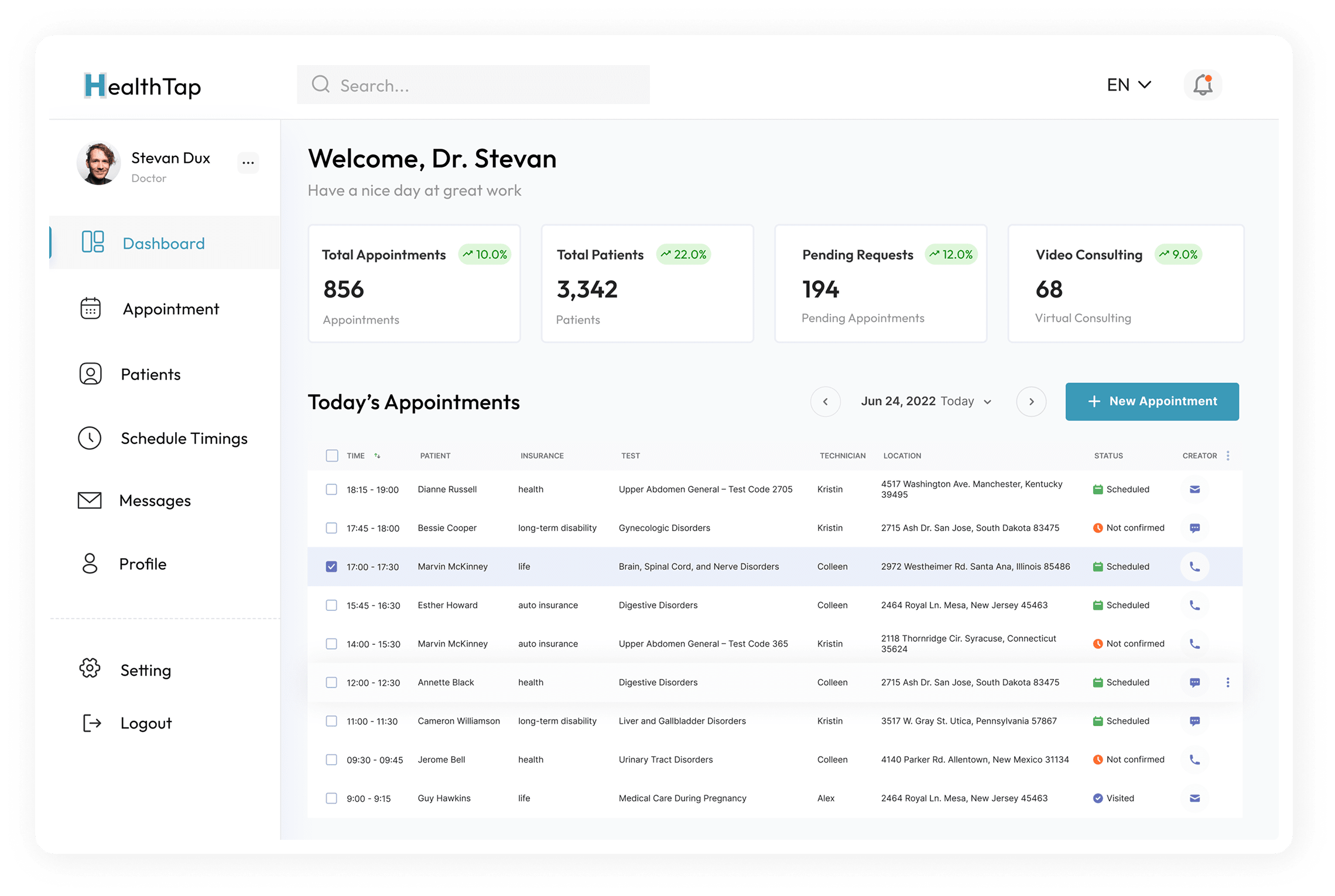
An AI appointment scheduling chatbot built by Bitontree cut patient booking time by 65% for Cedar Valley Health Network, a U.S. multi-specialty hospital, lifted booking accuracy by 80%, and increased patient satisfaction by 75% - while keeping every interaction HIPAA-aligned and operating 24/7 across multiple languages
Team:
4 AI engineers + 1 Project Manager + 1 designer
Location: USA
USA
Industry:Healthcare
Project Type:Marketplace
Duration:20 weeks
Team:4 AI engineers + 1 Project Manager + 1 designer
About the Client
Cedar Valley Health Network is a U.S.-based multi-specialty hospital system serving patients across primary care, cardiology, orthopedics, pediatrics, and behavioral health. They had a digital booking page in place, but the actual scheduling workflow ran on manual specialist matching and human triage. Front-desk staff handled symptom intake, specialist routing, and follow-ups one patient at a time.
Cedar Valley needed an AI appointment scheduling chatbot that could handle high-volume bookings, route patients to the right specialists, and operate around the clock without expanding administrative headcount.
The Challenge: Where Manual Scheduling Was Breaking Down
The hospital's appointment booking process had three operational gaps that cost both patients and staff time.
Manual Specialist Routing Slowed Every Booking
Front-desk staff matched patient symptoms to specialists by reading intake notes and applying tacit knowledge of doctor availability. The process introduced booking delays of roughly four minutes per patient and produced frequent mismatches between symptoms and the specialist assigned. Mismatches required rebooking, rescheduling, and downstream cleanup work - each of which compounded the original delay.
The Legacy Booking System Created Double-Bookings
The legacy booking system did not sync bidirectionally with doctor calendars or patient medical history. Result: double-booked specialists, missed clinical context when patients arrived, and manual reconciliation between scheduling software and the EHR. Staff were running three systems in parallel and stitching them together by hand.
After-Hours and Multilingual Patients Were Underserved
Patients calling outside business hours could not book at all - requests were pushed into next-day queues, where many lapsed. Patients from non-English-speaking communities had to wait for human translators. Two patient segments - after-hours callers and limited-English-proficiency patients - were structurally underserved by the manual workflow. The Joint Commission's communication standards and HHS Office for Civil Rights guidance on language access were the compliance backdrop for both gaps.
What Was at Stake
Patient drop-off during booking, revenue lost to no-shows, administrative burnout from repetitive scheduling, and an inability to scale appointment volume without proportional headcount growth. Every booking delay was a potential lost patient relationship in a competitive U.S. healthcare market - and every routing mismatch increased the risk of a deferred diagnosis
The Solution
Bitontree operated as an embedded AI engineering team alongside the hospital's IT and clinical operations groups, building a custom AI appointment scheduling chatbot integrated directly into the hospital's existing infrastructure. The system handles the end-to-end booking workflow: patient intake, symptom assessment, specialist matching, calendar synchronization, confirmation, reminders, and follow-up scheduling. This case anchors our AI chatbot development practice and our broader healthcare AI work.
Architecture Decisions
Bidirectional calendar sync
The chatbot reads and writes to the hospital's internal scheduling software and individual doctor calendars in real time, preventing double-booking and surfacing accurate availability to patients during booking conversations.
HIPAA-aligned data handling
Encrypted data in transit and at rest, role-based access controls, automatic PII detection, complete audit trails for every patient interaction, and signed Business Associate Agreements (BAAs) across the vendor chain - aligned with the HHS HIPAA Security Rule administrative, physical, and technical safeguards.
Multilingual NLP layer
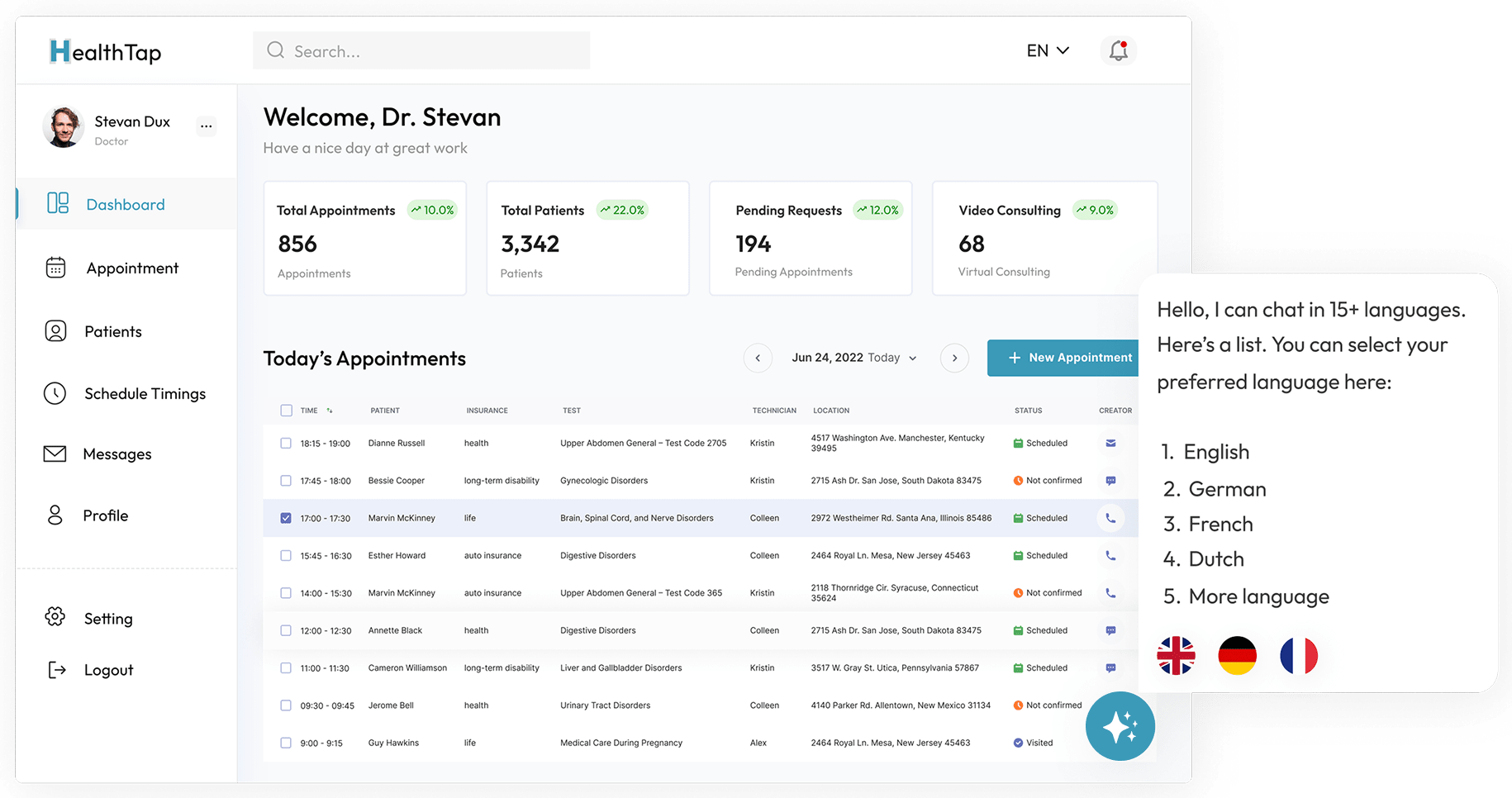
Patient interactions across multiple languages without human translator involvement. Patients converse in their preferred language; the system processes intent and routes accordingly.
Specialist routing logic
A custom routing engine matches patients to specialists based on reported symptoms, urgency level, doctor availability, and medical history. Routing decisions are explainable - every match has a logged rationale that clinical operations can audit.
Telemedicine integration
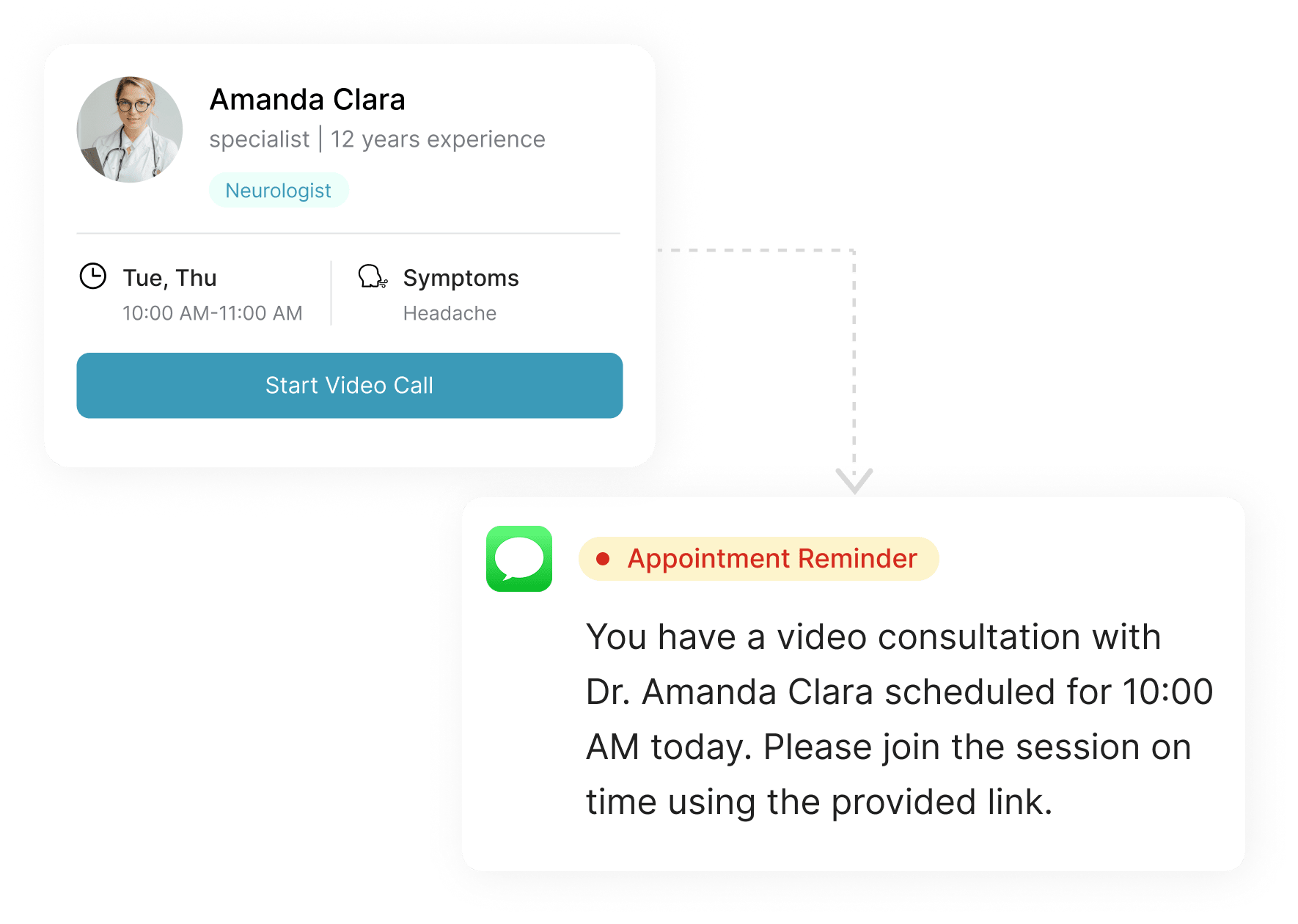
Patients opting for virtual consultations receive automatically scheduled video sessions with secure links and pre-appointment reminders delivered through the chatbot interface.
Core Features We Built

Real-Time Automated Appointment Booking
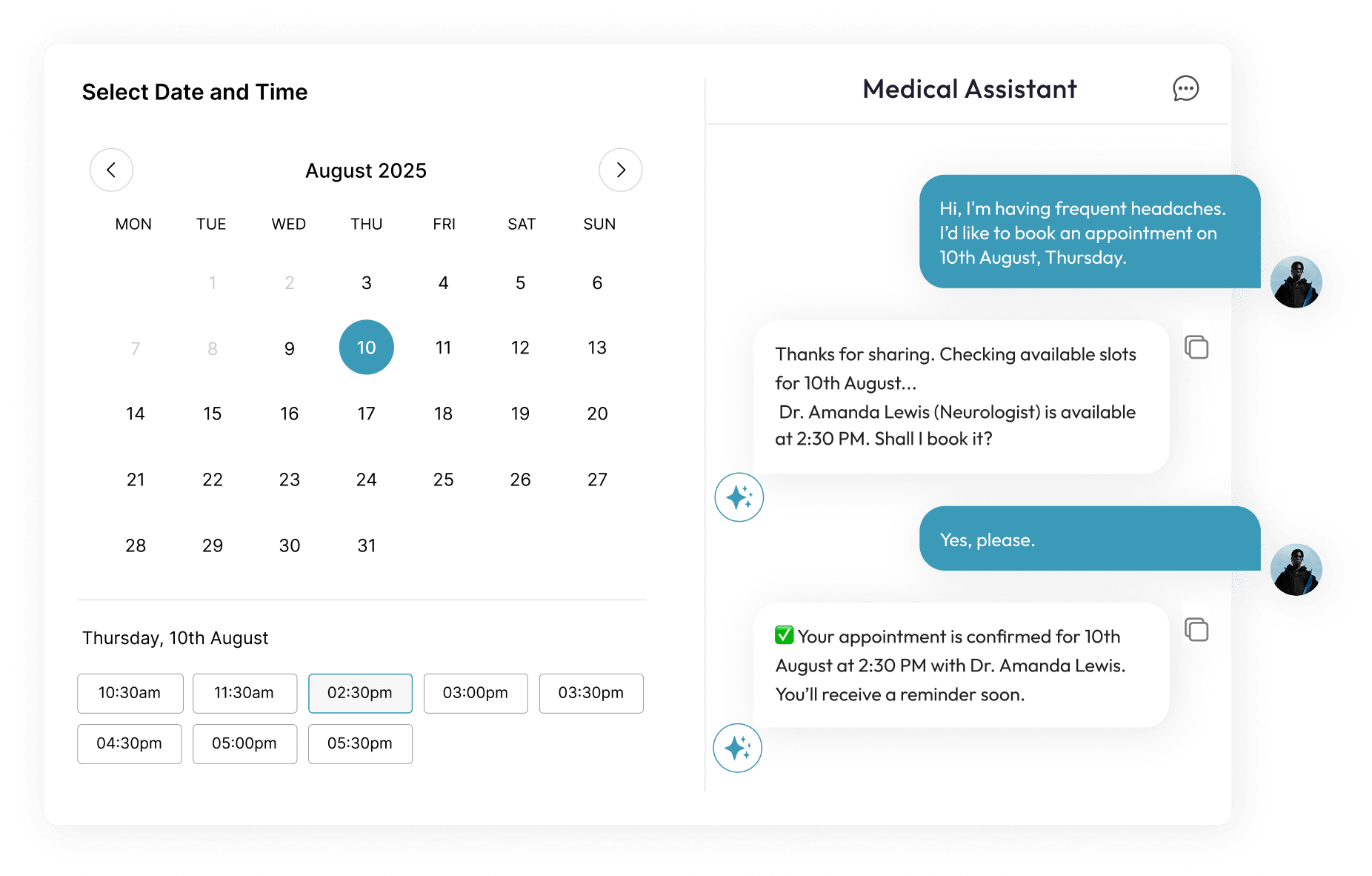
The chatbot asks patients about symptoms, preferred timings, and urgency, then auto-matches them to the right specialist based on internal routing logic. Booking happens in a single conversation, not a back-and-forth across multiple staff members.
Bidirectional Calendar and System Integration
The chatbot syncs with the hospital's calendar and scheduling tools in both directions. It prevents double-booking, manages reschedules, and surfaces real-time availability to both patients and staff.
Personalized Patient Health Dashboard
A secure patient portal that gives a consolidated view of upcoming appointments, medical history, past consultations, prescriptions, and key health metrics. Patients see their full record without calling the hospital.
24/7 Multilingual Virtual Assistance
Always-on support in multiple languages. Patients from diverse backgrounds book appointments, get queries resolved, and access health information without needing human intervention or translator scheduling. This addresses HHS Office for Civil Rights guidance on meaningful language access in healthcare settings.
Automated Reminders & Post-Appointment Follow-Up
Timely reminders for upcoming visits reduce no-shows. The system also automates follow-up appointment scheduling based on each doctor's availability and the patient's treatment plan - aligned with American Medical Association guidance on continuity of care for chronic conditions.
Virtual Consultation Support
Patients opt for telemedicine through the chatbot interface. The system schedules video consultations, generates secure session links, and delivers pre-appointment reminders, all without requiring a separate booking flow.
Manual Scheduling vs AI Appointment Scheduling Chatbot
| Dimension | Manual Front-Desk Scheduling | AI Appointment Scheduling Chatbot |
|---|---|---|
| Response time per booking | ~4 minutes per patient | Under 90 seconds (65% faster) |
| Booking accuracy | Baseline (frequent mismatches) | 80% accuracy improvement |
| Operating hours | Business hours only | 24/7 |
| Languages supported | English + scheduled translator slots | Multiple languages, on-demand |
| Calendar + EHR integration | Manual reconciliation across 3 systems | Bidirectional real-time sync |
| Audit trail for HIPAA compliance | Inconsistent paper + system logs | Complete per-interaction audit log |
The Result
After deploying the AI appointment scheduling chatbot, the hospital saw measurable improvements across scheduling speed, patient experience, administrative load, and booking accuracy from full patient scheduling automation. Each metric below is paired with its pre-deployment baseline.
65%
Faster Appointment Scheduling
80%
Booking Accuracy Improvement
75%
Lift in Patient Satisfaction Score
50%
Reduction in Admin Workload Hours
Technologies Used
The system was engineered using production-proven AI and integration technologies selected for accuracy, latency, and HIPAA compliance requirements.

What Our Clients Say

Bitontree built our AI appointment scheduling chatbot in 4 months, and our front-desk team finally has breathing room. Patient bookings happen in seconds instead of minutes, specialist matching accuracy is dramatically better, and the multilingual support reaches patient communities we struggled to serve before. The HIPAA-aligned data handling was built in from day one, which was non-negotiable for us.
Chris GeorgeDirector of Patient Operations
Looking For More Case Studies?
Don’t just take our word for it - our track record reflects our expertise and success.


Frequently Asked Questions
What is an AI appointment booking chatbot for healthcare?

An AI appointment booking chatbot for healthcare is a conversational AI system that schedules patient appointments automatically by asking about symptoms, preferred timings, and urgency, then routing patients to the right specialist based on availability and medical history. It runs 24/7 across web, mobile, and messaging channels.
How does an AI appointment booking chatbot work?
The chatbot collects patient symptoms, urgency, and preferred timing through natural conversation, matches patients to the right specialist using internal routing logic, checks doctor availability through calendar sync, confirms bookings, and sends automated reminders. This process delivered 65% faster appointment scheduling in our healthcare deployment.
Can an AI appointment booking chatbot integrate with existing hospital systems?
Yes. The chatbot integrates with hospital scheduling software, electronic health records, doctor calendars, and reminder workflows through APIs. Bidirectional sync prevents double-booking, supports rescheduling, and gives both patients and administrative staff real-time visibility into appointment status across the hospital.
Is an AI appointment booking chatbot HIPAA-compliant?
When built for U.S. healthcare, AI appointment booking chatbots use HIPAA-aligned architecture with encrypted data handling, role-based access controls, complete audit trails, automatic PII redaction, and signed BAAs with all vendors in the data chain. Patient data protection is built in from day one.
Can the chatbot route patients to the right specialist automatically?
Yes. The chatbot uses internal routing logic to match patients to the right specialist based on reported symptoms, urgency, doctor availability, and medical history. This auto-matching delivered 80% improvement in booking accuracy in our healthcare deployment, replacing the manual triage that slowed traditional appointment booking.
Does the AI appointment chatbot support multilingual patients and telemedicine?
Yes. The chatbot operates 24/7 in multiple languages, serving patients from diverse backgrounds without human intervention. The multilingual and always-on availability contributed to a 75% improvement in patient satisfaction. For telemedicine, it automatically schedules video consultations and generates secure session links and reminders.
Can an AI appointment booking chatbot reduce patient no-shows?
Yes. The chatbot sends automated reminders across multiple channels, confirms attendance before appointments, and triggers follow-up scheduling based on doctor availability and treatment plans. These automated workflows recover revenue lost to missed slots and free clinical staff from manual reminder calls and rescheduling work.
Can an AI appointment chatbot reduce administrative workload at hospitals?
Yes. Manual scheduling tasks get replaced by automated workflows and smart routing logic. In our healthcare deployment, the chatbot delivered a 50% drop in administrative workload, freeing front-desk and scheduling staff to focus on higher-value patient interactions and complex cases requiring human judgment.