



- Home>
- E Learning Academy Platform

An All-in-One E-Learning Platform for Career Skill Development
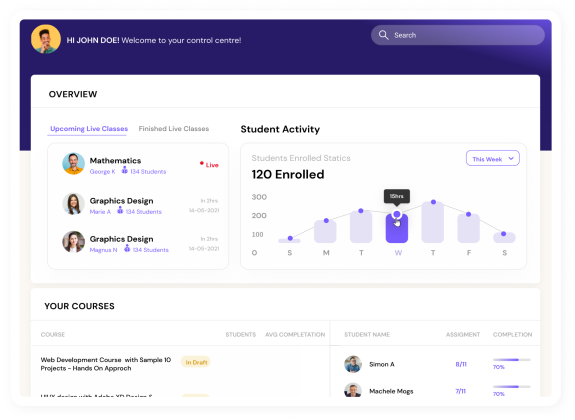
An e-learning platform built by Bitontree for a US-based learning academy delivers self-paced online courses, live virtual classrooms, automated and manual assessments, progress tracking, digital certification, and gamified engagement to learners building career-ready skills. The platform consolidates 9 core modules into a single learning management system (LMS) that supports learners, instructors, and administrators on a unified, mobile-ready web application.
Services Used:
Team:
4 full-stack engineers + 1 UX designer + 1 QA engineer + 1 PM
Location: USA
USA
Industry:Education
Project Type:Marketplace
Duration:32 weeks
Services Used:Web App Development, Offshore Development
Team:4 full-stack engineers + 1 UX designer + 1 QA engineer + 1 PM
About the Client
A US-based e-learning academy was scaling fast, and the team was hitting the limits of its patchwork stack of off-the-shelf course platforms and third-party video tools. The academy serves learners pursuing personal and professional growth across a wide range of skill-building disciplines, from technology to business to creative fields. Their mission is to deliver accessible, flexible, and cost-effective learning opportunities that help individuals stay competitive in the fast-paced modern job market.
The patchwork worked for small cohorts but could not scale to support thousands of concurrent learners across multiple disciplines, multi-role user permissions, and unified progress tracking. The academy approached Bitontree to build a custom learning management system that consolidated their entire learning operation onto one platform.
The Challenge: Building a Unified E-Learning Platform That Removes Access Barriers
The client faced four structural challenges in delivering quality education at scale.
Limited Access to Quality Education and Modern Learning Tools
Many learners faced geographical isolation, inadequate infrastructure, or financial constraints that blocked them from accessing quality education. Brick-and-mortar training centres could not reach these learners. The client needed a centralized e-learning platform that delivered flexible, cost-effective skill development without requiring physical attendance or premium pricing.
Transitioning Learners From Traditional Classrooms to Digital Education
Many incoming learners were transitioning from traditional classroom-based education to digital learning for the first time. The platform needed to feel intuitive enough for digital newcomers while offering the depth that experienced online learners expected, self-paced courses, live classroom sessions, peer interaction, and instructor-led guidance all in one place.
Managing Multi-Role User Workflows at Scale
The platform had to support three distinct user roles, learners, instructors, and administrators, each with its own permissions, dashboards, and workflows. Learners enroll in courses, attend classes, submit assessments, and earn certificates. Instructors create content, run live classes, grade assessments, and monitor learner progress. Administrators manage roles, courses, billing, and reporting. Each role needed a tailored experience without compromising platform security or data integrity.
Measuring Training Program Effectiveness With LMS Data
Beyond enrolment counts, the academy needed deep analytics into learner performance, course completion patterns, time-on-task, assessment outcomes, and engagement signals. Without rich data, the academy could not refine course offerings, identify struggling learners early, or demonstrate ROI to corporate training clients.
What Was at Stake
Learners abandoning the platform mid-course due to poor user experience, instructors burning out on manual grading and administration, administrators losing visibility into platform health, and the academy losing market position to better-engineered learning management system competitors. In an EdTech market where learner retention and certification completion drive every metric that matters, every operational gap translated into churn and lost revenue.
The Solution: One Platform for Self-Paced Learning, Live Classes, and Certification
Bitontree engineered a custom e-learning platform that consolidated nine learning workflows, course creation, assessments, progress tracking, certification, live classes, mobile delivery, role-based access, automated notifications, and gamification, into a single web application. The build drew on Bitontree's education industry expertise in scalable learning management systems, video infrastructure for live classes, and analytics pipelines for learner performance tracking.
Architecture Decisions
Multi-modal course delivery: self-paced + live + hybrid
The platform supports on-demand courses for asynchronous learning, scheduled live virtual classrooms for synchronous instruction, and hybrid courses that combine both. Learners choose the format that fits their schedule; instructors design courses across formats from a single content management system.
Role-based access architecture with tailored dashboards
Three user roles, learner, instructor, administrator, each get their own dashboard, permissions, and workflow. Learners see enrolled courses and progress; instructors see content management and grading queues; administrators see platform-wide health, billing, and reporting. Authorization is enforced at the API layer, not the UI layer.
Real-time video infrastructure for live classes
WebRTC-based live classrooms support real-time video streaming, screen sharing, in-class chat, and presence indicators. Live sessions are recorded automatically and added to the course library for asynchronous review. Latency was tuned to keep live class interactions feeling natural.
Analytics and progress tracking pipeline
Every learner action, course start, video play, assessment submission, certificate earned, flows into a unified event pipeline. Instructors see learner-level performance; administrators see platform-level health; the analytics layer powers personalised recommendations and at-risk learner identification.
Gamification layer for engagement and retention
Badges, leaderboards, progress streaks, and achievement unlocks are wired into the learning workflow. Gamification is not a bolt-on, it is integrated with course progress, assessment scores, and certification milestones, so engagement signals reflect real learning outcomes.
Core Features We Built

Course Authoring and Content Library
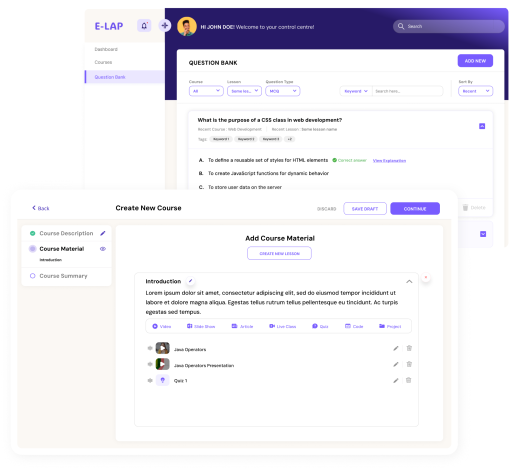
Instructors create, organise, and manage courses through a structured content management system. Courses are broken into modules, modules into lessons, and lessons into content blocks, video, text, downloadable resources, embedded quizzes, and external links. Content reuse across courses is supported, so common modules can be referenced rather than duplicated.
Assessment Engine With Auto and Manual Grading
The platform supports the full spectrum of assessment types, multiple choice quizzes, written assignments, peer reviews, capstone projects, and live evaluations. Automated grading handles objective question types instantly; manual grading queues handle subjective work with rubric-based scoring tools for instructors. All assessment data flows into the learner's progress record.
Learner Progress and Performance Analytics
Learner performance is tracked at every level, individual lesson completion, module progress, course completion, assessment scores, time spent, engagement frequency. Instructors get learner-level reports; administrators get cohort-level and platform-level analytics. The analytics layer feeds at-risk learner identification and personalised course recommendations.
Verifiable Digital Certification
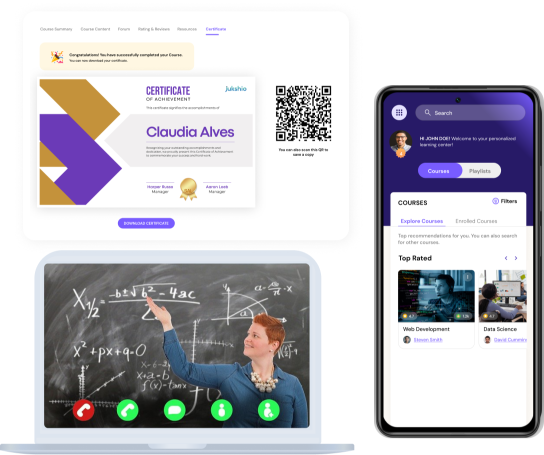
Learners who complete courses or modules receive digital certificates with unique verification IDs and tamper-resistant signatures. Certificates can be shared on LinkedIn, embedded in resumes, or verified by third parties through a public verification URL. The certification engine supports custom branding, multi-level credentials, and instructor co-signing for accredited programs.
Live Virtual Classrooms With Recording
Live virtual classrooms support real-time video streaming, instructor screen sharing, multi-participant chat, presence indicators, and Q&A queues. Sessions can be scheduled in advance with automated reminders, recorded for asynchronous viewing, and replayed within the course library. The live class infrastructure scales from one-on-one mentoring sessions to large cohort lectures.
Mobile-Ready Cross-Device Learning
The platform was built mobile-first with a responsive web application that works across desktop, tablet, and smartphone. Learners can start a lesson on desktop and finish it on their phone with progress synced. Video playback is optimised for mobile bandwidth, and offline downloads are supported for courses where learners may study without consistent internet access.
Role-Based User Management
The platform manages registration, role assignment, and profile management for three distinct user roles, learners, instructors, and administrators. Authentication uses OAuth 2.0 with optional single sign-on for corporate clients. Permissions are enforced at the API layer with audit logging of role changes for compliance.
Smart Reminders and Notifications
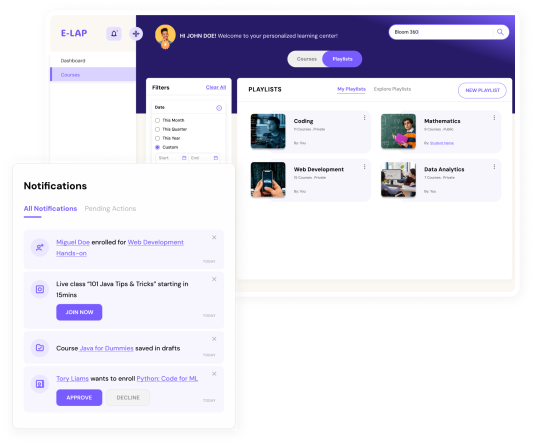
Automated email, SMS, and in-app notifications keep learners on track, upcoming class reminders, deadline alerts, new course announcements, certification milestones, and at-risk warnings when engagement drops. Notification frequency is configurable per learner to avoid notification fatigue.
Gamification Engine
Badges, leaderboards, progress streaks, and achievement unlocks are wired into the core learning workflow. Learners earn badges for course completion, perfect assessment scores, consecutive study days, and peer-help contributions. Leaderboards are scoped to courses or cohorts to maintain healthy competition without exposing learners to platform-wide comparison.
Traditional Classroom Learning vs E-Learning Academy Platform
| Dimension | Traditional Classroom | E-Learning Academy Platform |
|---|---|---|
| Geographic access | Limited to physical location | Available anywhere with internet |
| Course pacing | Fixed schedule for all learners | Self-paced, live, or hybrid |
| Assessment grading | Manual, days to weeks | Automated objective + manual subjective |
| Progress visibility | Instructor memory or paper records | Real-time analytics dashboards |
| Certification | Paper certificates, hard to verify | Digital certificates with public verification URL |
| Multi-role workflow | Manual coordination | Role-based dashboards for learner / instructor / admin |
| Engagement signals | Limited to in-class observation | Gamification + behavioural analytics |
| Cost per learner | High and linear | Low marginal cost at scale |
| Mobile access | Not applicable | Cross-device with offline downloads |
The Result
After launching the e-learning platform, the client measured improvements across learner accessibility, instructor productivity, certification issuance, and operational efficiency. The platform was delivered with the following scope and capability footprint.
60%
Higher Engagement in Live Classes
30%
Better Student Assessment Scores
45%
Higher Course Completion Rates
24/7
Self-Paced Course Access
Technologies Used
The e-learning platform was engineered with production-grade web technologies selected for video performance, real-time capability, multi-role security, and learner-facing UX quality.




Ready to Build Your E-Learning Platform?
Tell us about your learner base, your course content scope, the live and self-paced modes you need, the user roles to support, and the regulatory scope (FERPA, GDPR, accreditation requirements). We will assess the highest-ROI build opportunities and give you a clear scope and timeline.
What Our Clients Say

Bitontree built our e-learning platform in under eight months with a scope most LMS vendors would have stretched over a year. Course creation, live classes, assessments, certification, gamification, nine core modules, three distinct user roles, all on one mobile-ready web application. Instructors stopped jumping between tools. Learners stopped abandoning courses because of friction. The platform consolidated our learning operations and gave us the analytics we never had before.
Jennifer CollinsHead of Product
Looking For More Case Studies?
Don’t just take our word for it - our track record reflects our expertise and success.


Frequently Asked Questions
What is a Learning Management System (LMS)?

A Learning Management System (LMS) is a digital platform that delivers, manages, and tracks educational courses online. It enables instructors to create content, learners to access lessons at their own pace, and administrators to monitor progress, replacing traditional classroom limitations with scalable, accessible online learning experiences.
How does an e-learning platform manage courses and students?
An e-learning platform manages courses through tools for content creation, module organization, and lesson delivery. Student management features handle enrollments, role-based access for learners and instructors, progress tracking, and automated notifications, giving administrators full visibility into enrollment trends and learner performance from a single dashboard.
Can an LMS support live classes and virtual classrooms?
Yes. Modern LMS platforms support live virtual classrooms with real-time video streaming, screen sharing, and interactive communication. Instructors can deliver live lectures, host group discussions, conduct Q&A sessions, and record sessions for later access, combining the engagement of live teaching with the flexibility of on-demand learning.
How does an LMS handle assessments and grading?
An LMS handles assessments through configurable tests, quizzes, and assignments with both automated and manual grading. The system supports multiple question types, randomized question pools, time limits, and instant feedback for learners, while giving instructors detailed analytics on individual and cohort performance across every assessment.
Can learners earn certificates through an e-learning platform?
Yes. E-learning platforms issue digital certificates automatically when learners complete courses or modules. Certificates can include unique verification IDs, completion dates, and accreditation details, making them shareable on professional networks and verifiable by employers, which boosts employability and learner confidence in the job market.
Is an LMS accessible on mobile devices?
Yes. Modern LMS platforms are built with responsive design or native mobile apps, giving learners full access to courses, assessments, live classes, and certificates from smartphones and tablets. This mobile compatibility eliminates location barriers and supports learning on the go, increasing course completion rates significantly.
How does gamification improve learner engagement on an LMS?
Gamification improves learner engagement through badges, leaderboards, points, and progress milestones that reward consistent learning behavior. These mechanics tap into intrinsic motivation, making courses feel less like obligations and more like achievements. Platforms with gamification consistently show higher course completion rates and longer learner retention.
How long does it take to build a custom e-learning platform?
Development timeline depends on feature scope, the number of user roles, content management complexity, live class integration, mobile compatibility, and compliance requirements. Every project receives a detailed timeline and milestone schedule during the discovery phase, based on your specific platform vision and operational requirements.