


- Home>
- Mcp Server Development Company
MCP Server Development Company
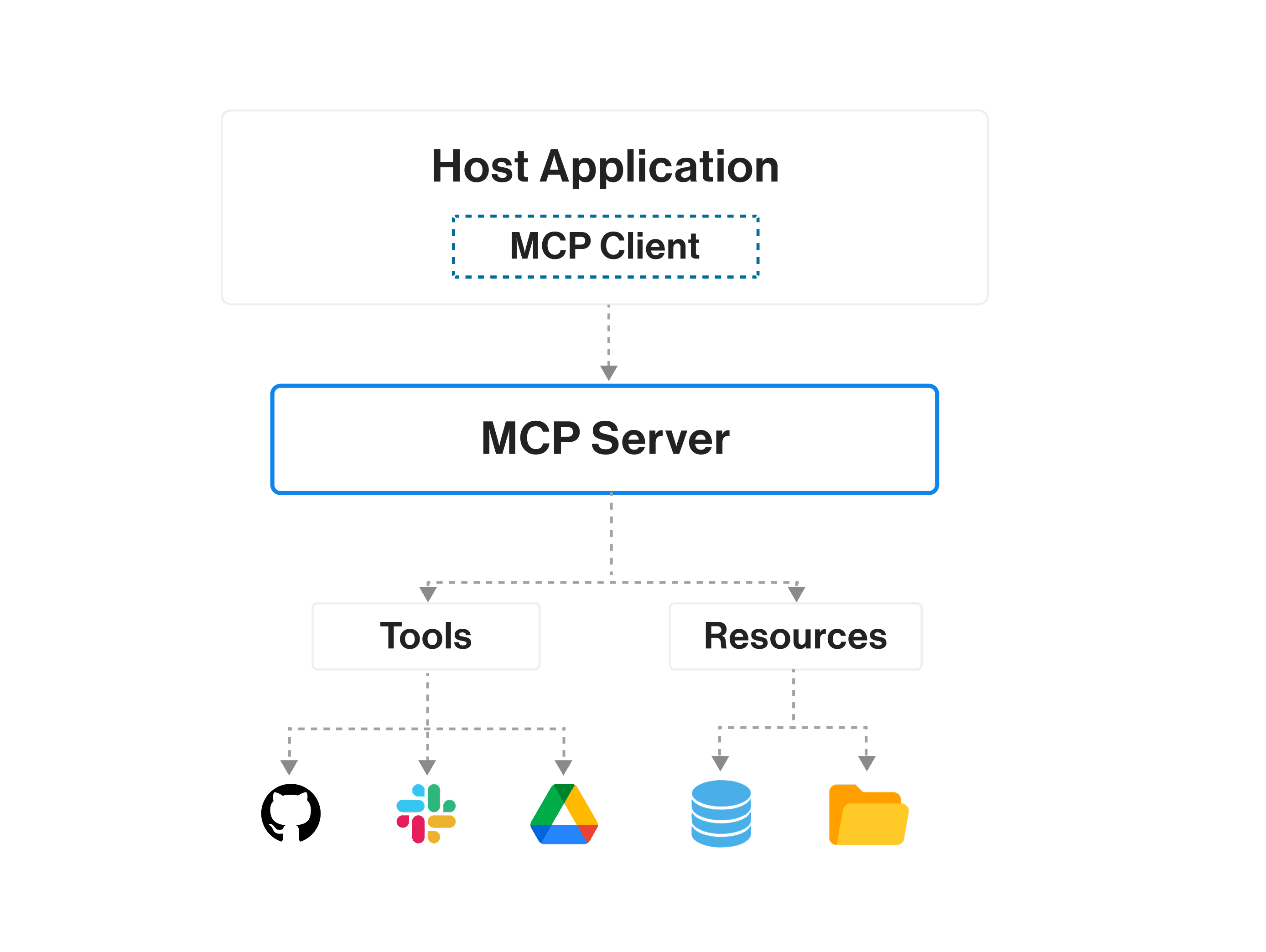
We build MCP (Model Context Protocol) servers that give AI agents governed access to your tools, databases, and APIs: one protocol-standard integration layer instead of a tangle of one-off API connections. Every server ships with least-privilege permissions, tool-use logging, and monitoring built in. We design it around your systems, take it to production, and keep running it as your stack and the MCP ecosystem evolve.
What is MCP Server?
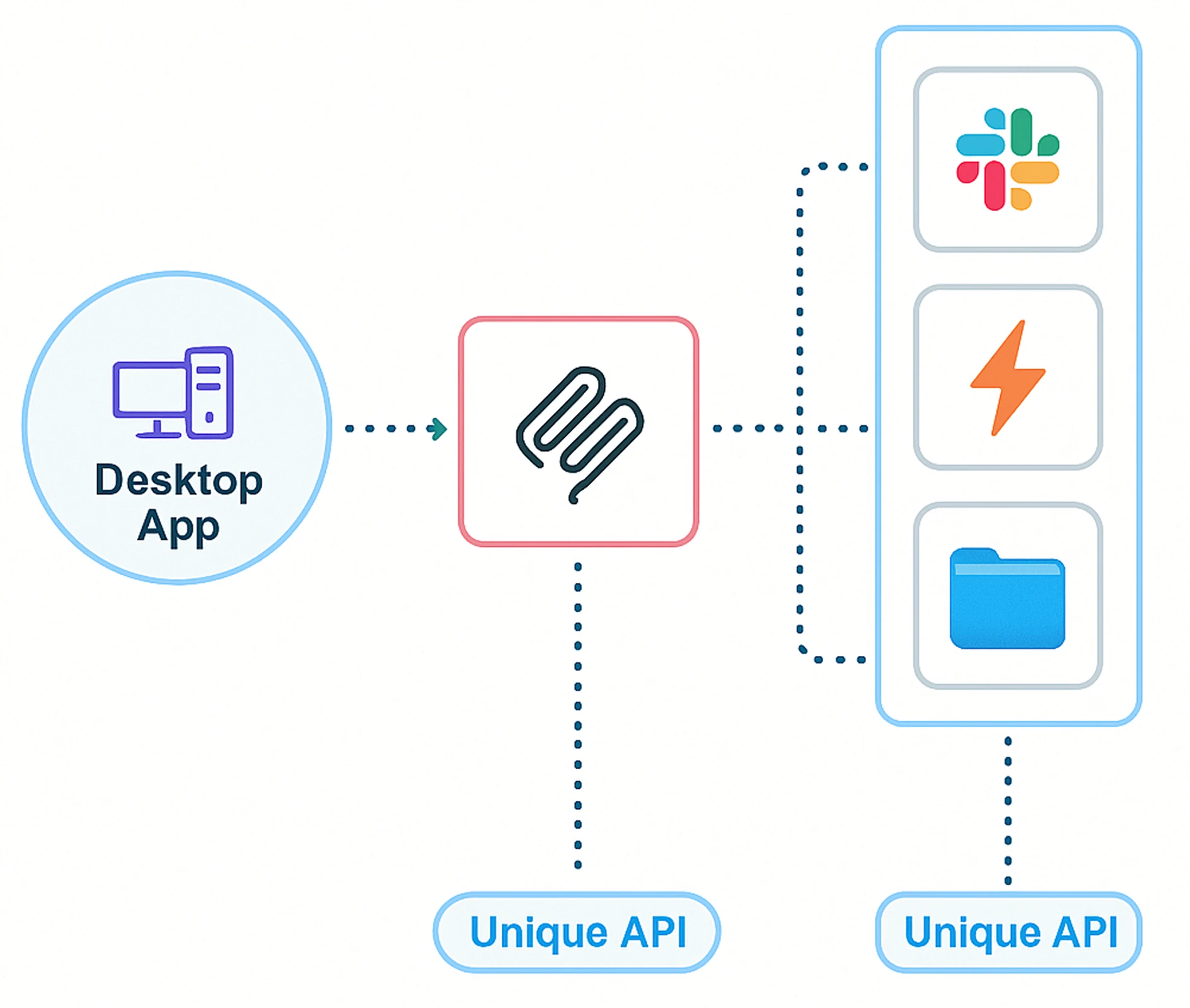
MCP (Model Context Protocol) is an open protocol introduced by Anthropic that standardizes how AI applications connect to tools and data. An MCP server is the piece you build on your side of that connection: it exposes your databases, APIs, and internal systems through the protocol so any MCP-compatible AI application can use them, without a custom integration for each pairing.

Before MCP, every AI-to-tool connection was a one-off build that broke whenever an API changed. With an MCP server, you define your tools once, set permissions on what a model is allowed to touch, and every agent or assistant that speaks the protocol can connect. For businesses running AI agents against real systems, that means less integration work, clearer security boundaries, and a log of every tool call.
MCP Server Development Services We Provide
We build MCP servers that hold up in production: stable under load, secure by default, and maintained as your stack changes. MCP also pairs naturally with the retrieval systems we build as a RAG development company, giving agents both the knowledge layer and the ability to act on it. From first implementation through optimization and ongoing maintenance, the same team stays on the system. We built custom MCP infrastructure for GrowStack's marketing automation platform, where it gives 130+ AI agents governed access to tools and services across the product.

Custom MCP Server Architecture
As a MCP Server Development Agency, We develop custom MCP server architectures built around your AI platform’s workflows, data flows and integration requirements. These servers make smooth interaction between AI models, APIs, databases and internal systems. The creates an adaptable, scalable MCP server architecture that supports intelligent, real-time decision making and future growth.

Tool Integration and Routing
We connect third-party tools, APIs and AI agents to your MCP ecosystem via intelligent routing and context-aware logic. This way, the correct tool or service is invoked at the appropriate time with respect to user intent or model response. It enhances system compatibility, reduces processing overheads, and increases overall accuracy of AI responses.

Memory Layer Integration
Our MCP servers integrate with vector databases such as Pinecone, Weaviate, and Redis to enable long-term memory and contextual awareness. This allows AI models to retain past interactions, retrieve relevant knowledge, and deliver more accurate responses. Memory integration significantly improves personalization, reasoning depth, and LLM performance.

Security and Access Control
We build authentication, authorization and isolation into the MCP environment, so a tool call carries the caller's permissions rather than a shared service account. That boundary is what stops an agent reaching a system it was never scoped for, and it is the part most MCP deployments leave until after the first incident.

MCP Workflow Optimization
We optimize MCP execution layers, tool invocation pipelines, and model response handling to reduce latency and improve throughput. By tuning concurrency, request routing, caching, and resource utilization, MCP workflows remain stable under heavy AI workloads. This ensures predictable performance and consistent AI responses in production environments.

Migration & Modernization
We help businesses transition from legacy AI infrastructure to modern MCP-based systems with zero downtime. Our migration strategy is based on containerization, module design and context-aware optimization. This allows scalable model deployment, easier maintenance, and future-proofed for higher level AI features.
Featured Projects
Don’t just take our word for it - our track record reflects our expertise and success.


LogisticsSingapore: 
Smart AI Invoice Processing System
AI-powered invoice processing for a Singapore-based logistics enterprise. OCR and ML automate data extraction, validate against business rules, and process invoices end-to-end across multiple formats and currencies.
PythonLangGraphCrewaiStreamlitAzure
Industries We Serve with MCP Server Development
Bitontree as a leading MCP development company, excels in delivering high-tech AI solutions tailored to the unique needs of diverse industries. Different industries benefit from custom MCP servers by aligning AI workflows with their specific operational processes, data sensitivity, and scale requirements. MCP architecture allows flexible tool integration, controlled context sharing, and intelligent model orchestration suited to varied business environments. This adaptability makes custom MCP servers ideal for supporting industry-specific compliance, performance demands, and evolving AI use cases across sectors.

Healthcare
We build AI systems for healthcare practices and hospitals: patient intake automation, medication adherence calling, clinical documentation, and scheduling agents. Every system is engineered inside HIPAA controls, with BAAs signed and integration into Epic, Cerner, and Athena via FHIR.

E-Commerce
Our AI agents help ecommerce businesses on Shopify, WooCommerce, Magento, and BigCommerce recover abandoned carts, personalize product recommendations, automate order tracking, and retain customers. Each system integrates directly with your storefront, fulfillment, and payment stack.

Manufacturing
Manufacturers work with us to deploy predictive maintenance, quality inspection automation, supply chain forecasting, and production scheduling agents. Each system integrates with your ERP, MES, and IoT sensor data to turn operational signals into automated decisions.

Logistics
For logistics operators, we engineer document AI for invoice and customs processing, freight matching, exception handling, and shipment tracking automation. Each system integrates with your TMS, carrier APIs, and ERP to automate high-volume operational workflows.

SaaS Product Companies
We build AI features inside SaaS products: copilots, in-app assistants, agentic workflows, semantic search, and RAG over customer data. Our engineers integrate into your existing product org, adopting your stack, CI/CD, and release cadence.

Real Estate
Real estate and PropTech teams rely on us for lead qualification agents, property matching, automated showing scheduling, document processing, and client follow-up. Each system integrates with your CRM and listing platforms to keep prospects engaged through closing.
Why MCP Servers Are Essential for AI Businesses
MCP servers are essential in managing orchestration of complex AI workflows, serving as an intermediating layer across models, tools, and data sources. They enable multi-agent systems, automate decision pipelines, and preserve context across interactions, capabilities widely used in AI chatbot development services. With MCP architecture, AI businesses can scale operations cost-effectively while maintaining continuity, control, and high performance in production environments.
Instant Data Access
MCP servers provide real-time data access to both structured and unstructured data sources that help AI models to make smarter and faster decisions. This minimizes the latency in AI production lines and ensures insights remain up-to-date. As Volume of data grows, MCP architecture scales well and remains efficient without performance degradation.
Elastic Scalability for AI Workloads
MCP servers hold up as users, agents and model interactions grow, because concurrent tool calls queue rather than collide. What usually degrades first is not the server but a downstream system being called faster than it was designed for, so rate limits belong in the MCP layer rather than in each agent.
Secure AI Tool & Data Governance
MCP servers regulate access between AI models, tools, and external systems. Businesses keep full control over what data models would be able to access, maintaining compliance, privacy, and system integrity. This security-first architecture also makes MCP the perfect environment for enterprise AI environments.
AI Workflow Orchestration & Context Management
MCP servers orchestrate complex AI workflows by maintaining context across tools, agents, and sessions. This enables reliable multi-step reasoning, automation pipelines, and multi-agent collaboration. The result is more intelligent, predictable, and production-ready AI systems.
Our MCP Development Process
Our MCP development process runs end to end: architecture, custom MCP components, then integration with the models, tools and data sources the agent needs to reach. Each build is tested for performance, security and the failure cases, because a tool that errors silently is worse than one that refuses. We then ship to production and stay on it as the workloads change.
01
Strategy & Use-Case Alignment
We start by understanding your AI workflows, business objectives, and agent interactions. This step defines how MCP will be used across models, tools, and data sources. It ensures the server architecture directly supports real-world AI use cases and future scale.
02
MCP Architecture & Design
As a MCP development company, we design a customized MCP architecture by selecting the right LLMs, tools, memory layers, and routing logic. This includes defining context boundaries, permissions, and interaction patterns. The result is a clean, efficient blueprint built for performance and extensibility.
03
Server Development & Tool Integration
As a MCP server provider, We build MCP server and integrate LLMs, APIs, vector databases, internal services, and third-party tools. Each integration follows MCP standards for structured communication and secure access. This creates a unified, intelligent server layer for AI agents.
04
Memory and Workflow Management
We configure memory layers, context retention, and multi-step workflows for accurate reasoning and continuity. This step focuses on improving response relevance, tool chaining, and data retrieval efficiency. It ensures smarter and more consistent AI interactions.
05
System Testing and Validation
We rigorously test tool execution, context switching, memory recall, security rules, and load handling. Performance tuning and failure handling are refined to ensure stability under real AI workloads. Only production-ready MCP systems move forward.
06
Deployment and Continuous Support
We deploy behind a staged rollout so a bad release affects one environment rather than all of them, and downtime stays at zero or close to it. After launch we monitor, patch and tune as traffic grows, since the load profile of an agent platform rarely matches what was estimated before launch.
Benefits of Prioritizing MCP Server Development for AI Integration
MCP server development gives AI integration a single framework instead of a bespoke connector per tool, which is what makes multi-agent workflows and tool orchestration tractable. It reduces the number of moving parts, shortens the path to a working agent, and holds performance steady under demanding workloads. A purpose-built MCP architecture also keeps data integrity intact as the number of connected systems grows, which is where ad hoc integrations usually start to fail.
Prioritize Core Functionality
Building the MCP server first helps define clear, modular core functions. This makes the system easier to scale, maintain, and upgrade over time, without being delayed by interface development or additional features.
Effortless AI Connectivity
MCP-first architecture allows instant integration with AI tools like Claude, Cursor, or Windsurf. Real-time data interaction and automated task execution are enabled without complex manual workflows or setup.
Adaptive Interface Support
MCP servers support multiple interfaces such as GUIs, CLIs, AI dashboards, and APIs without modifying the underlying logic. This ensures easy adaptation to new technologies and emerging platforms while keeping your core system stable.
Efficient Development and Testing
Testing is simplified as AI tools can directly interact with your MCP-based application. This reduces debugging time, accelerates workflow validation, and speeds up the overall development cycle.
Boosting AI-Human Collaboration
MCP supports smooth cooperation between human teams and AI agents. This speeds up featured development, content ideation and decision making processes for a more efficient and productive workflow.
Future-Proof Scalability
MCP servers offer you a flexible system that can accommodate your needs as your business grows. Integrating new AI models, memory layers or connections becomes smooth, ensuring long-term system performance and adaptability.
Get Insights from Our Latest Buzz
Stay informed with the newest happenings in the world of emerging technologies.



Other Related Services
A custom MCP server vs generic API integration
How a purpose-built MCP server compares to wiring each tool up by hand.
| Generic API integration | Bitontree | |
|---|---|---|
| Secure, scoped tool access | Ad hoc, per integration | MCP standard with least-privilege scope |
| Breadth of connected tools | One-off per API | Databases, APIs, and tools via MCP |
| Auth and permissions | DIY per endpoint | Least-privilege, audited |
| Maintenance as APIs change | Breaks on API changes | Maintained as part of the build |
| Observability and logging | Minimal | Tool-use logging and monitoring |
Frequently Asked Questions
What is MCP Server Development?

MCP server development is the work of building a Model Context Protocol server for your business: defining which tools and data sources it exposes, setting permissions on what models can access, and connecting it to your AI applications. The result is one governed integration layer that any MCP-compatible model or agent can use.
Why Should I choose MCP servers for my AI solutions?
MCP servers are secure and easily integrate with third party tools to ensure that data flows in real time. They provide smooth integration between AI models and external systems, so you know they are ideal for businesses that wish to scale their AI capabilities in an optimal way.
How do MCP servers improve my AI system’s Performance?
MCP servers provide secure data exchanges and smooth integration with external systems, improving better performance and scalability of AI models, resulting in more quickly decision-making with lower system latency.
What support do you offer after MCP server deployment?
After deployment, we offer continuous monitoring and service updates to secure, optimize, and keep your MCP server reliable. Our dedicated team is available at anytime to assist and tackle whatever issue you might encounter.
Can MCP servers integrate with my existing AI tools and platforms?
Yes. MCP servers connect to a wide range of AI models, APIs and external applications through one protocol rather than a separate integration per tool. The practical gain is that adding the fifth tool costs about what the second one did, instead of compounding.
How scalable are MCP servers for growing AI workloads?
MCP servers are built to handle increasing AI workloads without performance degradation. Their modular architecture and optimized resource management allow businesses to scale operations, add new models, and expand integrations while maintaining low latency and high throughput.
Are MCP servers secure for handling sensitive AI data?
Absolutely. MCP servers implement strong security protocols, access control, and data isolation techniques. These measures ensure sensitive information remains protected while enabling safe AI-driven operations across multiple tools and data sources.
What factors determine the scope and complexity of an MCP server implementation?
The scope of an MCP server depends on how your AI models interact with tools, data sources, memory layers, and external systems. Factors such as workflow complexity, security requirements, scalability needs, and the number of integrations directly influence architecture decisions. A well-defined scope ensures the MCP server is built for long-term performance, flexibility, and reliable AI operations.
Can MCP servers support real-time AI workflows and automation?
Yes. MCP servers are optimized for real-time data exchange, context-aware interactions, and automation pipelines. This enables AI models to process information instantly, execute tasks efficiently, and maintain consistent performance even under high-demand conditions.
Let's scope your AI build
Tell us about the workflow, system, or use case you want AI on. We'll come back with an honest read on what's buildable, what isn't, and the shortest path to production, usually within one working day.

7+
Years Of Experience

40+
Skilled Professionals

105+
Projects Delivered

35+
Global Clientele Served