Because it assumes the program's behavior is fixed by its code, and an agent's behavior is decided at runtime by a model reading input.
SAST, DAST, and dependency scanning still matter and we run them, but they look for known vulnerability classes in deterministic control flow: injection into a query, a missing auth check, an outdated package. They were not built for a system where instructions arrive as untrusted text and the model chooses which tool to call. None will flag that a support ticket can talk your agent into emailing a customer record outside the org, because at the code level nothing is broken; the agent uses its tools exactly as designed.
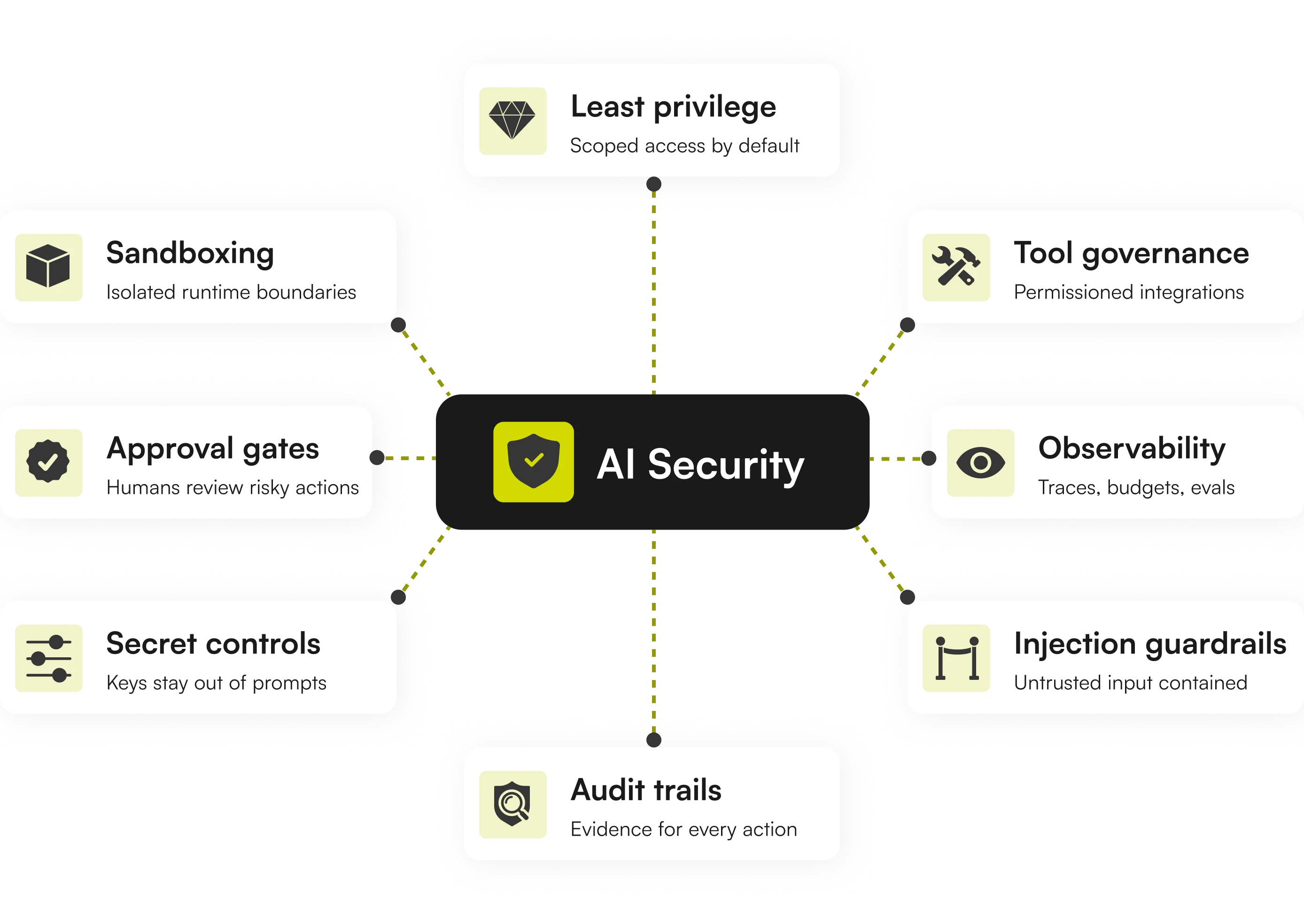
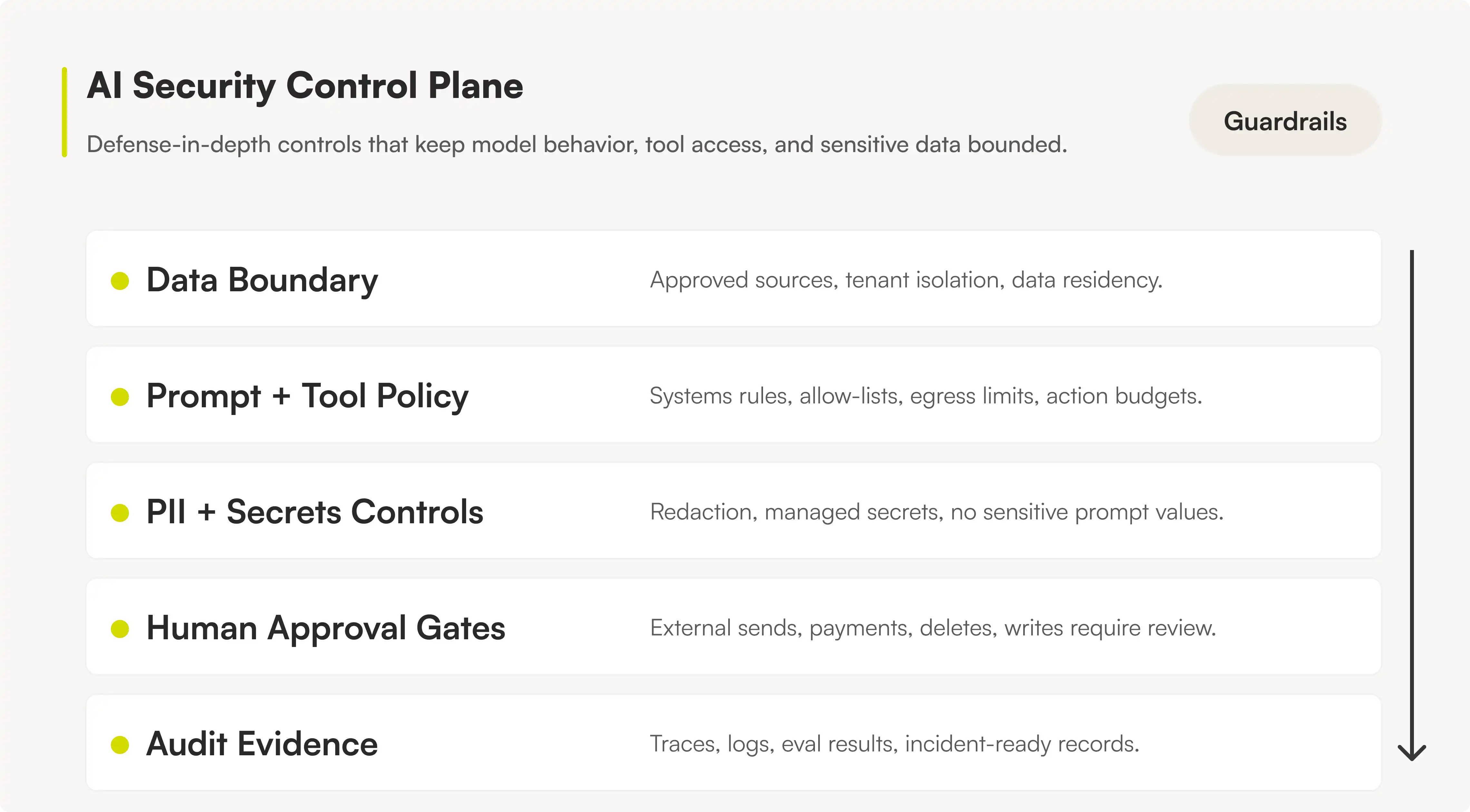
Securing an agent also needs threat modeling around the model boundary, red-team testing for prompt injection and excessive agency, scoped credentials, sandboxing, egress control, and approval gates. We layer the AI-specific controls on top of the appsec basics, not either one alone.