March 12, 2025
Model Context Protocol (MCP): The Secret Weapon for Startups and SMEs to Supercharge AI

Yash Vibhandik
CEO


Every AI tool integration today is bespoke, one connector per system, each written and maintained separately. The Model Context Protocol is an attempt to replace that with a single standard for AI data integration, the way USB-C replaced a drawer of chargers.
For startups and SMEs with limited resources, MCP provides a powerful solution by connecting AI models with essential business data, without costly development overhead. By standardizing the way models access data, MCP helps businesses accelerate AI development, enable automation with AI, and drive meaningful outcomes in SME digital transformation.
In this comprehensive guide, we’ll explain:
✅ What MCP is and how it works
✅ Why MCP matters more to a small team than a large one
✅ Real-world MCP use cases across industries
✅ Step-by-step guidance to implement MCP in your business
What is Model Context Protocol (MCP)?
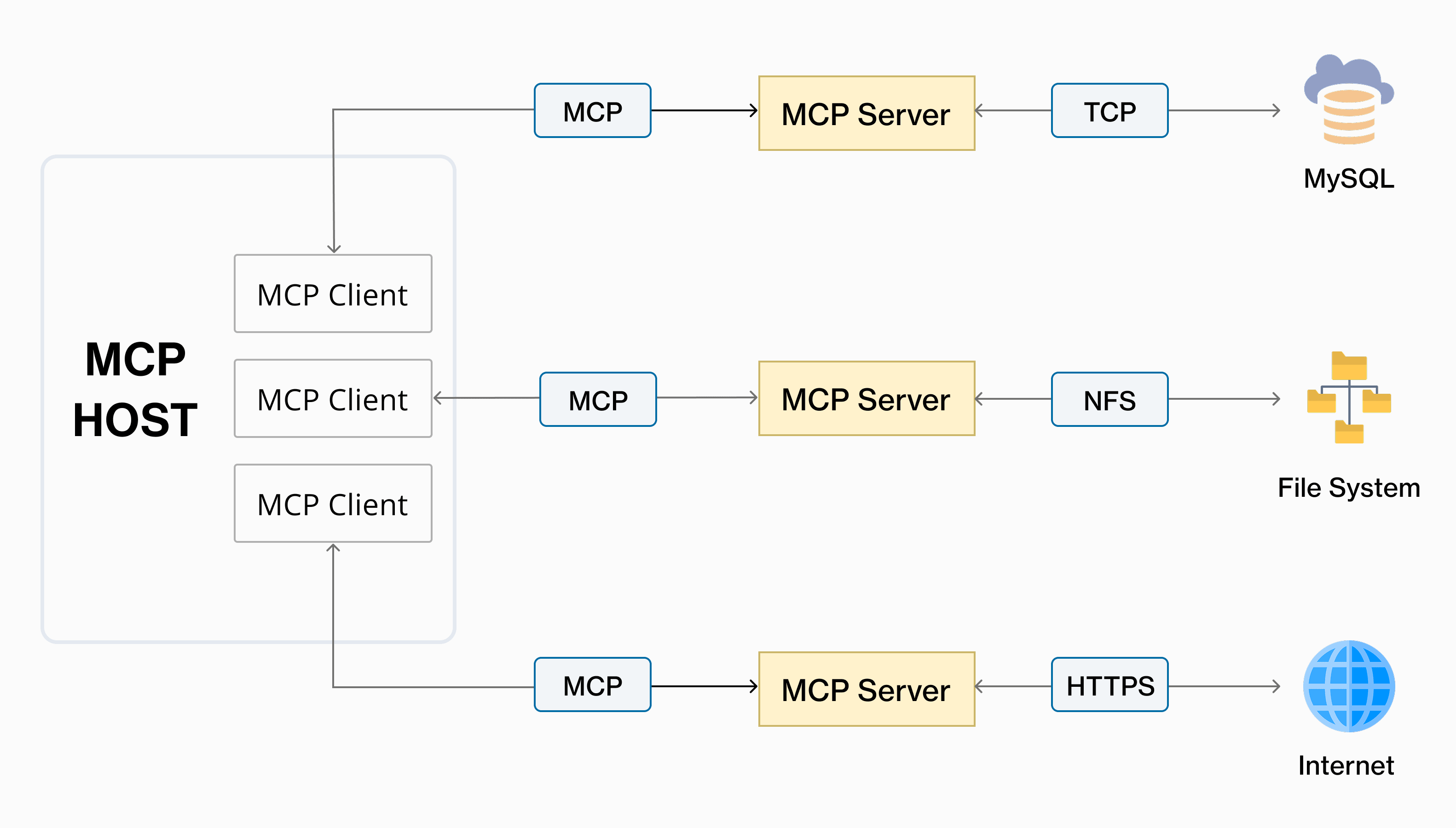
The Model Context Protocol (MCP) is an open-source protocol that gives AI models one consistent way to reach data sources, APIs and internal systems, instead of a bespoke connector for each. Think of MCP as a universal translator that enables your AI tools to access data securely and efficiently.
Key Components of MCP
-
MCP Servers
Lightweight programs that expose data sources, APIs, or functions (e.g., fetch weather data, query a database).
-
MCP Clients
Applications such as Claude Desktop, Cody, or other AI systems that connect to MCP servers.
-
Data Integration
MCP supports connections to local, cloud, or remote data sources via standardized interfaces.
How MCP Works?
i. Server Setup
Deploy an MCP server that connects to your data source.
ii. Client Connection
Configure your AI client to access the server for real-time data.
iii. Context-Aware Results
The AI model processes data directly from the MCP server, improving context and accuracy.
Example: Imagine a customer support chatbot connected to a Zendesk MCP Server. When a user asks a complex question, the AI dynamically pulls knowledge base articles to deliver precise answers, all without custom coding.
Why Startups and SMEs Should Care
For smaller businesses, MCP unlocks powerful capabilities without heavy investment. Here is what changes in practice:
1. Cost Efficiency
-
Smaller Language Models (SLMs) are up to 17x cheaper to run than large-scale models like GPT-4.
-
MCP extends the capabilities of these cost-effective models by integrating specialized tools, enhancing performance without additional training costs.
2. Simplified Integrations
-
MCP eliminates the need for fragmented custom integrations.
-
Connect systems like Google Drive, Slack, PostgreSQL, or Kubernetes directly through MCP servers.
3. Faster Development
-
Pre-built MCP servers (e.g., for file access, database queries) accelerate AI development cycles.
-
Custom MCP servers built using Python or TypeScript offer flexibility for tailored use cases.
4. Future-Proof Technology
-
MCP ensures your AI solutions remain compatible with future systems and tools.
-
Early adopters like Block and Apollo already use MCP to build agentic systems that automate workflows across several tools at once.
Real-World Use Cases for MCP in Startups and SMEs
Here’s how MCP is solving real-world problems across industries:
1. AI-Powered Customer Support
Problem: Handling repetitive queries strains resources.
Solution: MCP servers pull real-time data from platforms like Zendesk, Notion, or Freshdesk. The chatbot answers from that data rather than from training memory, which is the difference between a correct order status and a plausible one.
2. Smart Internal Tools
Problem: Employees spend excessive time searching for internal data.
Solution: Build an MCP server for your PostgreSQL or MongoDB database. Employees can use natural language commands like:
"Show Q1 sales in Texas" The MCP server auto-generates the required SQL query, improving data accessibility.
3. Automated DevOps Management
Problem: Deploying applications to Kubernetes requires complex commands.
Solution: MCP simplifies deployment using intuitive commands like:
deploy_application(image)
Even small models can trigger deployments without YAML expertise, accelerating DevOps processes.
4. Dynamic Market Research
Problem: Tracking competitors manually is inefficient.
Solution: An MCP server connected to Crunchbase, Brave Search, or web-scraping tools enables your AI to analyze competitor data and generate insights automatically.
5. Personalized Marketing Automation
Problem: Generic marketing campaigns often miss the mark.
Solution: An MCP server connected to platforms like Shopify, Mailchimp, or HubSpot enables your AI to generate customized email campaigns based on customer behavior and purchase history.
Getting Started with MCP
Follow these steps to integrate MCP into your business:
Step 1: Choose a Pre-Built Server
- Anthropic’s GitHub repository offers pre-built servers for popular services like:
✅ Google Drive
✅ Slack
✅ PostgreSQL
✅ File Systems
Step 2: Develop Custom MCP Servers
-
For custom data integration, develop MCP servers using Python or TypeScript SDKs.
-
Example: Build an MCP server that connects to Trello for dynamic task updates.
Step 3: Integrate with AI Tools
-
Tools like Continue, Cody, and Claude Desktop natively support MCP.
-
Simply type “@” and select your MCP server to add context-aware insights.
Step 4: Secure Your MCP Setup
-
MCP runs locally by default, ensuring sensitive data remains on-premises.
-
Future updates will offer secure remote servers with enterprise-grade encryption.
The Future of MCP: Unlocking AI Innovation
The MCP ecosystem is expanding rapidly. Exciting developments include:
✅ Framework Integration: Tools like Quarkus now simplify MCP server development.
✅ Marketplace Growth: Platforms like Anthropic’s Marketplace enable businesses to share and monetize custom MCP servers.
✅ Collaboration: MCP servers can serve multiple tools, ensuring data consistency across applications.
Conclusion: MCP Is Your AI Force Multiplier
For startups and SMEs, MCP protocol AI offers a powerful, cost-effective solution to unlock smarter AI integrations. By connecting AI tools directly to your business data, MCP removes the integration work that usually decides whether a small team ships an agent at all.
Ready to get started?
- Dive into Anthropic’s Quickstart Guide for step-by-step instructions.
- Explore sample MCP servers on the MCP GitHub Repository.
- Join the MCP community forum to connect with developers and gain insights.
- Join the MCP community forum to connect with developers and gain insights to dive deeper into MCP vs API.
The future of AI is about smarter connections, and with MCP, that future is now.
I am the founder and CEO of Bitontree, where I lead embedded AI engineering teams that build and run production AI: agents, RAG and knowledge systems, document AI, and workflow automation for healthcare, logistics, legal, and SaaS companies. I write about what it actually takes to ship AI that survives contact with production.
Frequently Asked Questions
Why is MCP important for AI integration?

MCP streamlines AI workflows by defining clear objectives, breaking tasks into manageable steps, and ensuring the AI model understands context for better results.
What types of marketing tasks can AI agents handle?
Yes, MCP optimizes model training by guiding the model with relevant context, ensuring faster learning and better performance.
How does MCP differ from traditional AI models?
Unlike traditional AI models that rely heavily on predefined instructions, MCP hands the model live context from your systems at request time, allowing AI systems to adapt dynamically to new data and changing conditions.
Can MCP improve AI-driven marketing strategies?
Yes, MCP helps AI systems better understand customer behavior, preferences, and trends, enabling personalized marketing campaigns that boost engagement and conversions.