


An AI agent for logistics handles shipment exception resolution, customs documentation, route optimization, freight invoice auditing, inventory and demand management, carrier quoting, 3PL operations coordination, and proactive delivery management - across your TMS, WMS, ERP, and carrier network. Our logistics AI deployments resolve shipment exceptions 70% faster, reduce freight invoice errors by 85%, and cut manual coordination work by more than half within 90 days.
Your logistics coordinators spend their entire day doing the same thing: checking shipment status across four carrier portals, chasing customs brokers for clearance updates, comparing rates in spreadsheets, and responding to customers asking where their freight is. When something goes wrong - a delay, a customs hold, a damaged pallet - they spend 45 minutes pulling information from three systems before they can even start resolving the problem.
This guide covers what an AI agent for logistics and supply chain actually does in production, the specific use cases it handles, the measurable benefits it delivers, and how we implement one that transforms logistics operations. We also build custom AI agents AI chatbots for teams that need a different scope.
What Is an AI Agent for Logistics and Supply Chain?
An AI agent for logistics is an autonomous system that receives a logistics event - a shipment delay, a customs hold, a freight invoice discrepancy, a carrier rate request, an inventory threshold alert - reasons about what action to take, retrieves live data from your transportation and warehouse systems, executes the resolution, and reports the outcome - without waiting for a coordinator to manually investigate routine events.
Built on large language models (GPT-4o, Claude) for natural language processing, retrieval-augmented generation for SOP and contract grounding, and direct integrations with your TMS (SAP TM, Oracle TMS, Blue Yonder), carriers (FedEx, UPS, DHL, FourKites, project44), and ERP (SAP, Oracle, NetSuite) - the full technical architecture is covered in our AI agent development service page.
Why Logistics Teams Need AI Agents in 2026
Your logistics team is not slow. The work they do every day - checking statuses, assembling documents, comparing rates, investigating exceptions - is inherently slow because it requires pulling data from multiple disconnected systems and executing the same steps manually, every single time.
Coordinators spend 4 hours per day checking shipment status across carrier portals
FedEx portal. UPS portal. DHL portal. Your LTL carrier’s tracking page. Each status gets copied into your TMS or spreadsheet. Multiply by 50-200 active shipments and the entire day is consumed by data aggregation that produces zero decisions. An AI agent pulls status from every carrier API in real time and surfaces only the shipments that need attention.
Exception resolution takes 45 minutes because data is scattered across 3 systems
A shipment is delayed. Your coordinator checks the carrier portal for the reason, pulls order details from the TMS, looks up the customer SLA in the ERP, and checks warehouse availability. That is 45 minutes of assembly before the first action. An AI agent assembles this context in seconds and either resolves autonomously or presents a recommendation.
Freight invoice errors cost 3-5% of your total shipping spend
Carrier invoices contain errors on 10-20% of shipments: wrong weight, duplicate billing, rate discrepancies against your contract. Most get paid without verification because manual auditing at scale is impossible. An AI agent audits every invoice line against your contracted rates, flags discrepancies, and files disputes automatically.
Customs documentation delays add 2-5 days to international shipments
One wrong HS code, one missing certificate, one formatting error - and your container sits at the port for days. An AI agent assembles customs documents from your ERP and product data, validates them against destination country requirements, and submits electronically. Clearance times drop from days to hours.
Your customers hear about delays from their tracking app, not from you
A shipment is delayed by 2 days. Your customer finds out from FedEx tracking and calls you frustrated. An AI agent detects the delay the moment the carrier reports it, calculates the new ETA, and notifies the customer proactively with an updated timeline - before they check their own tracking.
In short: your coordinators spend most of their day gathering information that already exists in your systems. AI agents eliminate the data gathering so your team focuses on the decisions that optimize your supply chain.
Key Use Cases of AI Agents in Logistics and Supply Chain
An AI agent for logistics goes far beyond shipment tracking. Here are the use cases that production deployments handle - each involves multi-system execution and documented procedures.
Shipment Exception Detection and Autonomous Resolution
The agent monitors every active shipment across all carriers. When an exception occurs - delay, missed pickup, damaged freight, delivery failure - it assembles context from your TMS, carrier API, and WMS, classifies severity, and initiates resolution: reroute, expedite, reship, or notify the customer with a new ETA. Exceptions that took 45 minutes of manual investigation resolve in under 5 minutes.
Best for: Operations managing 100+ active shipments where exception resolution requires manual investigation across TMS, carrier portals, and warehouse systems.
Intelligent Customs and Documentation Processing
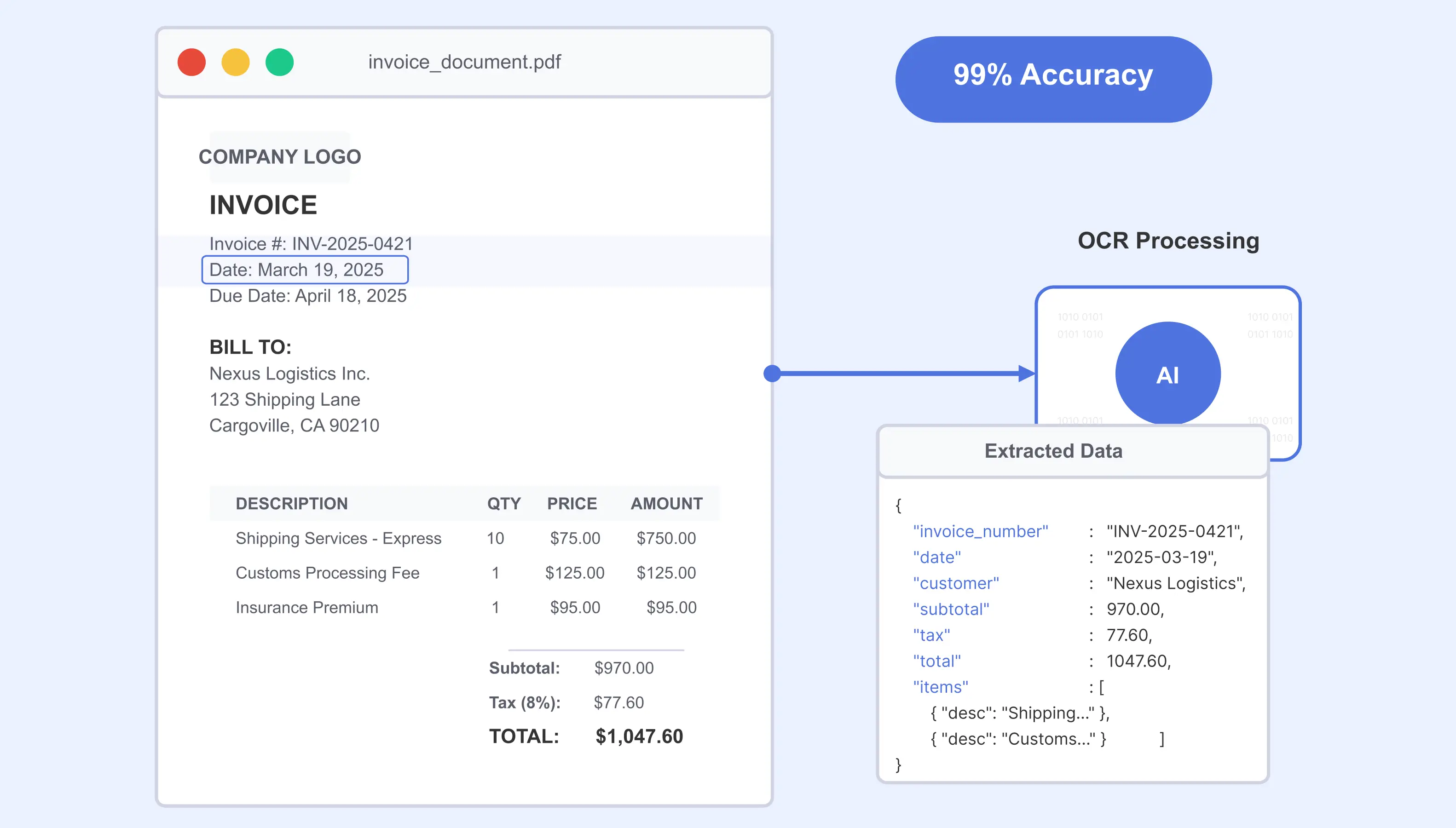
The agent assembles customs documents for international shipments: commercial invoices, packing lists, certificates of origin, and HS code classifications. It validates each document against destination country requirements, flags errors before submission, and submits electronically through your broker or port authority. Documentation that took 2 hours of manual assembly completes in minutes with near-zero error rates.
Best for: Importers and exporters processing 20+ international shipments per month where customs delays from documentation errors cost $500-$2,000 per incident in demurrage fees.
Route Optimization and Delivery Scheduling
The agent evaluates every delivery route against real-time traffic data, carrier transit times, fuel costs, delivery windows, and vehicle capacity constraints. It recommends or executes the optimal route plan, adjusts schedules dynamically when conditions change mid-transit, and rebalances loads across vehicles when new orders enter the system. Route efficiency improves by 12-18% and fuel costs drop proportionally.
Best for: Fleet operators and last-mile delivery companies managing 50+ daily routes where manual routing leaves 15-20% efficiency on the table.
Freight Invoice Auditing and Dispute Resolution
The agent compares every carrier invoice line against your contracted rates: base charges, fuel surcharges, accessorials, and dimensional weight calculations. It flags discrepancies, calculates the overcharge, generates dispute documentation with supporting evidence, and submits the claim through the carrier’s portal. Companies typically recover 3-5% of total freight spend that currently leaks through unaudited invoices.
Best for: Companies spending $500K+ annually on freight where manual auditing covers less than 30% of invoices and errors go undetected.
Automated Inventory and Demand Management
The agent monitors inventory levels across warehouses and DCs, correlates them with demand signals (sales velocity, seasonal patterns, promotional calendars, external factors), and triggers replenishment orders when stock hits configured thresholds. It adjusts safety stock levels dynamically and alerts your planning team when demand patterns deviate from forecasts. Stockouts reduce and overstock carrying costs drop.
Best for: Distributors and retailers managing 1,000+ SKUs across multiple locations where demand variability causes frequent stockouts or excess inventory.
Autonomous Quote and Rate Management
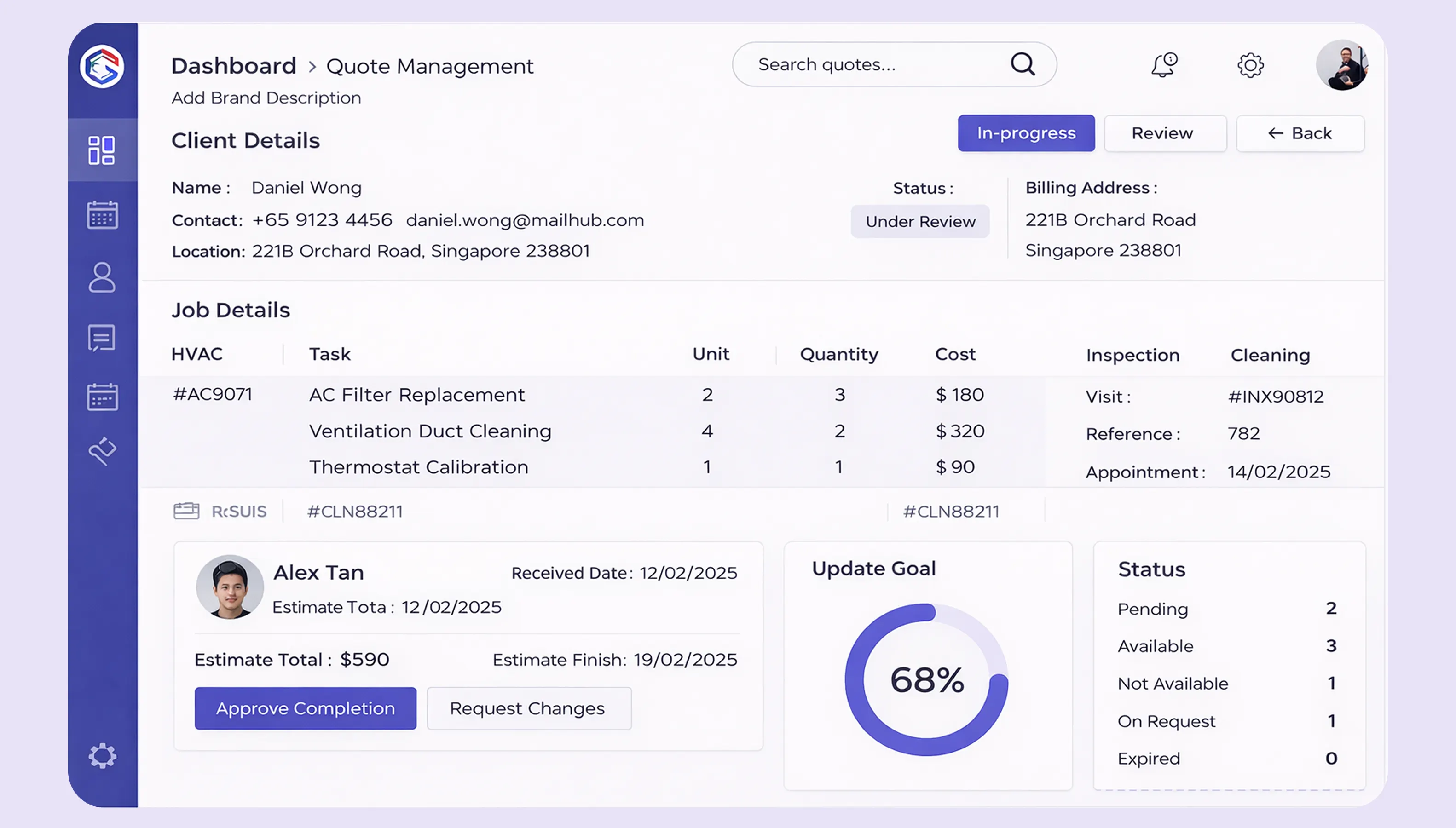
When a customer or sales rep requests a shipping quote, the agent queries contracted rates across all carriers, calculates total landed cost including fuel surcharges and accessorials, applies customer-specific pricing rules and volume discounts, and returns the quote. For spot quotes, it queries live carrier rates and returns options ranked by cost, transit time, and service level. Quote turnaround drops from hours to minutes.
Best for: Freight brokers and 3PLs generating 50+ quotes per day where manual rate comparison across carrier portals takes 15-30 minutes per quote.
Multi-Client 3PL and 4PL Operations Orchestration
The agent manages logistics operations across multiple clients with different SLAs, preferred carriers, billing rules, and reporting requirements. It monitors shipments per client, applies client-specific exception thresholds, generates automated status reports, reconciles billing across client accounts, and enforces carrier allocation rules. Multi-tenant complexity that overwhelms coordinators becomes systematic.
Best for: 3PLs and 4PLs managing 50+ client accounts where client-specific SLAs and reporting consume more coordinator time than actual logistics operations.
Proactive Delivery ETA Management and Notification
The agent monitors carrier tracking and recalculates ETAs when transit deviates from plan. When the updated ETA differs from the promised delivery, it proactively notifies the customer, sales team, or downstream warehouse with the new timeline and resolution options. Your customers hear about delays from you first, not from their tracking app.
Best for: Companies with delivery SLA commitments where late notifications damage customer relationships and trigger contract penalties.
Agent Assist Mode for Logistics Coordinators
Not ready for autonomous execution? Agent-assist mode runs alongside your team. When an exception occurs, the agent surfaces shipment details, carrier status, customer SLA, and a recommended action in a sidebar. The coordinator reviews and executes. The agent handles the information assembly that consumes most of their day.
Best for: Logistics teams that want AI productivity gains but need human judgment on every decision during the initial deployment phase.
How an AI Logistics Agent Works: From Exception to Resolution
Here is what happens when a shipment moves through your supply chain and an AI logistics agent is monitoring.
Step 1: A shipment event triggers the agent instantly
A carrier reports a delay. A customs hold is flagged. A delivery attempt fails. The agent activates within seconds, at 3 AM during a port backlog or at noon during peak shipping. No waiting for the morning shift to check the carrier portal.
Step 2: Agent pulls the complete shipment context
The agent retrieves order details from your ERP, shipment plan from your TMS, real-time carrier tracking, warehouse receiving schedule, and customer delivery SLA. Every decision is informed by the complete operational picture, not a single carrier portal check.
Step 3: Agent classifies the event and determines impact
A minor delay on a shipment arriving early is different from a missed pickup on a next-day delivery. The agent classifies by impact: will this breach a delivery SLA? Does this affect production schedules? Severity determines autonomous resolution vs coordinator escalation.
Step 4: Agent retrieves SOPs, contracts, and routing rules
The agent searches your standard operating procedures, carrier contracts, and customer SLAs through the RAG pipeline. Every resolution is grounded in your documented procedures and contracted terms.
Step 5: Agent executes the resolution across systems
The agent acts: reroutes to a backup carrier, submits corrected customs documentation, files a carrier claim, updates the delivery ETA, and notifies affected parties. For actions above configured thresholds, it packages the recommendation for coordinator approval.
Step 6: Complex decisions go to your team with full context
Carrier negotiations, customer escalations, and strategic rerouting during major disruptions go to your coordinator with everything assembled: timeline, financial impact, resolution options with cost comparisons. The coordinator decides. They do not investigate.
Step 7: Every event feeds your supply chain intelligence
Every exception, resolution, carrier metric, and cost impact is logged. You see which lanes have the highest exception rates, which carriers underperform, and where your routing rules need adjustment. Operational intelligence drives continuous supply chain optimization.
How AI Agents Improve Logistics Operations
Your coordinators manage exceptions instead of chasing shipment status
Manual status checking disappears. The agent monitors every shipment and surfaces only what needs attention. Coordinators reclaim 15-20 hours per week for carrier negotiations, customer relationships, and strategic routing decisions.
Your freight costs drop because every invoice gets audited
Every carrier invoice validates against contracted rates before payment. Overcharges and duplicate billing are caught automatically. For a company spending $2M on freight, that means $60K-$100K recovered annually.
Your customs clearance stops being a bottleneck
Documentation assembles automatically. HS codes validate against tariff schedules. Clearance times drop from days to hours because paperwork is right the first time.
Your delivery promises become reliable
When a shipment deviates, the customer knows within minutes - not days. Proactive notification replaces the reactive "where is my shipment" call. Customer trust improves because they hear about problems first, with a plan attached.
Your exception resolution happens in minutes, not hours
The 45-minute information assembly that preceded every exception decision compresses to seconds. Average resolution time drops by 70%, and the cascade effect of unresolved exceptions - missed connections, production delays, SLA penalties - shrinks proportionally.
Your carrier decisions are based on data, not habit
Continuous performance tracking replaces quarterly gut-feel reviews. Carrier scorecards update automatically. Underperformers are flagged before they cost you SLA penalties. Route allocation shifts to carriers that consistently deliver.
In short: AI agents eliminate the information gathering and manual execution that consume most of coordinator time. Your team focuses on carrier strategy, customer relationships, and the decisions that optimize your supply chain.
Logistics Segments Deploying AI Agents
Third-Party Logistics Providers
You manage shipments for 200 clients across 40 carriers. Every client has different SLAs, preferred carriers, and reporting requirements. An AI logistics agent handles the multi-tenant complexity so your team focuses on growing accounts.
- Multi-client shipment monitoring with client-specific SLA rules and exception thresholds
- Automated client reporting - daily status updates, weekly performance summaries, exception alerts
- Carrier allocation optimization across client routing preferences and contracted rates
- Freight invoice reconciliation across 40+ carrier accounts with client-specific cost allocation
- One 3PL: coordinator status update time dropped by 65%, exception resolution improved from 4 hours to 35 minutes
Ecommerce Fulfillment
You ship 5,000 parcels daily across 4 carriers. 300 WISMO tickets land every day. An AI agent connects order management, carrier tracking, and customer communication into one automated workflow.
- WISMO automation - tracking status delivered to customers before they ask
- Delivery exception detection with proactive customer notification
- Carrier rate comparison for parcel shipping with automatic optimization
- Return shipment tracking from customer to warehouse to restocking
- One D2C brand: WISMO tickets dropped by 80%, exception resolution from 6 hours to 20 minutes
Manufacturing Supply Chain
A delayed inbound shipment means a production line stops. An AI agent monitors every inbound material shipment against your production schedule and escalates before the disruption happens.
- Inbound material tracking linked to production schedules - delays flagged before they impact the line
- Just-in-time coordination with supplier tracking and receiving schedule optimization
- Outbound finished goods logistics with carrier selection based on customer SLAs
- Freight cost allocation across product lines for accurate landed cost calculation
- One manufacturer: zero production stoppages from logistics exceptions in 6 months, inbound tracking effort reduced by 70%
Cold Chain and Pharmaceutical Logistics
Your shipments have a 4-hour temperature excursion window. If the carrier’s reefer fails at 2 AM, you need to know immediately. An AI agent monitors temperature telemetry 24/7 and acts the moment an excursion is detected.
- Continuous temperature monitoring with instant excursion alerts and automated carrier escalation
- Chain of custody documentation for FDA and EU GDP compliance
- Expiration-based routing - shorter shelf life gets faster transit lanes
- Deviation reporting for regulatory audits with complete temperature history
- One pharma distributor: zero undetected temperature excursions since deployment, compliance documentation time reduced by 80%
Freight Forwarding
Your team manages 500 active international shipments across ocean, air, and rail. An AI agent consolidates tracking across carrier systems and handles documentation automatically.
- Multi-modal tracking - ocean, air, rail, and drayage in a single status view
- Automated customs documentation with HS code validation and country-specific compliance
- Port congestion monitoring with proactive rerouting recommendations
- Client-facing milestone updates delivered automatically at each transit stage
- One freight forwarder: customs documentation errors dropped to near zero, client status update time from 3 hours to 15 minutes daily
Common Challenges in Logistics AI Deployment - and How We Solve Them
Challenge 1: The agent makes a wrong routing or carrier decision
Booking the wrong carrier creates cost overruns and delivery failures.
How Bitontree solves this: Every routing decision validates against your contracted rates and service level requirements. Configurable cost thresholds for autonomous vs approval-required bookings. Rate validation against live carrier quotes. Rollback capability within cancellation windows.
Challenge 2: Carrier API data is incomplete or delayed
Some carriers update tracking every 12 hours. Decisions based on stale data can be worse than no decision.
How Bitontree solves this: Multi-source tracking cross-references carrier APIs with visibility platforms (FourKites, project44) and terminal data. Staleness detection flags data exceeding freshness thresholds. Uncertain data gets communicated as a range, not a false-precision ETA.
Challenge 3: The agent files incorrect freight disputes
Wrong disputes damage carrier relationships and waste time on invalid claims.
How Bitontree solves this: Every dispute validates against digitized carrier contracts with supporting evidence. Claims are staged for coordinator review during initial deployment. Dispute acceptance rate tracking continuously calibrates accuracy.
Challenge 4: Sensitive shipment data is exposed
Shipment data includes customer addresses, product values, and competitive logistics arrangements.
How Bitontree solves this: Data minimization - the LLM receives only what the current task requires. PII redaction on all logs. SOC 2 Type II compliant infrastructure. Client data isolation - your data never trains models for other clients.
Challenge 5: No visibility into cost savings or ROI
Without measurement, the deployment gets questioned at the first budget review.
How Bitontree solves this: Dashboard: exceptions resolved autonomously, resolution time reduction, freight invoice savings, coordinator hours saved, SLA compliance rate, and carrier claim recovery. Weekly optimization reports with financial impact quantified.
How We Build and Deploy an AI Agent for Logistics
Step 1: Logistics operations audit and use case mapping
We analyze your shipment volume, exception frequency, carrier mix, freight spend, customs workflow, and coordinator time allocation. Identify the top workflows by cost and time impact. Define success metrics: exception resolution time, freight cost recovery, coordinator hours saved, SLA compliance.
Step 2: Agent reasoning design and operational boundaries
We design decision logic for each workflow. Define what runs autonomously (status monitoring, ETA updates, invoice auditing), what needs approval (rerouting above cost threshold, expedite authorization), and what stays manual (contract negotiations, customer escalations). Your operational rules become the agent’s boundaries.
Step 3: System integration and RAG pipeline
Connect to your TMS (SAP TM, Oracle TMS, Blue Yonder), WMS (Manhattan Associates, Korber), carriers (FedEx, UPS, DHL), visibility platforms (FourKites, project44), and ERP (SAP, Oracle, NetSuite). Build the RAG pipeline for SOP and contract grounding. Test against your actual shipment data.
Step 4: Build, test, and parallel run
Build in 2-week sprints. Exception resolution testing against historical data. Freight audit validation against carrier contracts. Route optimization testing against live conditions. Then 2-4 weeks of parallel run - the agent recommends alongside your coordinators before autonomous execution.
Step 5: Phased deployment and optimization
Launch with shipment monitoring and freight auditing. Expand to customs automation, route optimization, quote management, and demand management in 30-day cycles. The agent improves every month from production data while maintaining the boundaries your team defined.
The Conclusion
A delayed shipment does not just affect one delivery. It cascades - through your warehouse schedule, your production line, your customer’s inventory plan, and your carrier’s next pickup. The difference between catching that delay at 3 AM when the carrier reports it and catching it at 9 AM when your coordinator opens their laptop is the difference between a resolved exception and a supply chain disruption.
Bitontree builds AI agents for logistics that monitor, resolve, and optimize - not just track. We integrate with SAP TM, Oracle TMS, FourKites, project44, Manhattan Associates, and your carrier network, and deploy with operational boundaries your logistics leadership defines.
Start with a free logistics operations audit. We analyze your shipment data, exception patterns, and freight spend, then deliver a deployment plan with timeline and projected cost savings - before you commit to anything.
Frequently Asked Questions
What is an AI agent for logistics?

An AI agent for logistics is an autonomous system that monitors shipments, detects exceptions, resolves issues, audits freight invoices, assembles customs documentation, optimizes routes, manages inventory triggers, and coordinates across TMS, WMS, carrier, and ERP systems - handing your coordinators only the decisions that require human judgment.
What systems does it integrate with?
TMS: SAP TM, Oracle TMS, Blue Yonder. WMS: Manhattan Associates, Korber. Carriers: FedEx, UPS, DHL, USPS, LTL carriers via API. Visibility: FourKites, project44, Descartes. ERP: SAP, Oracle, NetSuite. Customs: broker APIs and port authority submissions. Custom integrations via API.
How much does an AI logistics agent cost?
Cost depends on scope: the integrations, channels, data sources, and compliance requirements involved. We scope every engagement against your stack and give you a clear plan and timeline after a free AI fit assessment, before any commitment.
How long does deployment take?
Focused pilot (monitoring + freight auditing): 6-8 weeks. Full deployment (exception resolution, customs, route optimization, quotes, demand management): 10-14 weeks. Enterprise with multi-region integration: 12-16 weeks.
Will it replace our logistics coordinators?
No. The agent eliminates the data gathering and manual execution that consume most of coordinator time. Your team focuses on carrier negotiations, customer relationships, and strategic decisions. The agent makes coordinators more productive, not redundant.
How does it handle carrier API outages?
Multi-source tracking cross-references carrier APIs with FourKites, project44, and terminal data. Staleness detection flags stale data. Uncertain tracking communicates ranges instead of false-precision ETAs. Fallback to manual contact when APIs are down beyond acceptable windows.
Can it handle international shipments and customs?
Yes. The agent assembles customs documentation from your ERP and product data, validates HS codes, checks country-specific requirements, and submits electronically. It handles commercial invoices, packing lists, certificates of origin, and compliance declarations.
How does freight invoice auditing work?
Every carrier invoice line validates against your digitized contract rates. Discrepancies are flagged with evidence. Dispute documentation generates and submits through the carrier portal automatically. Companies typically recover 3-5% of total freight spend.
What is the difference between a logistics chatbot and an AI agent?
A chatbot answers questions about shipment status from your tracking data. An AI agent takes action: reroutes shipments, files carrier claims, submits customs documents, generates quotes, and processes exceptions end to end. See our logistics chatbot page for when a chatbot is the right fit.
How do you measure ROI?
Dashboard: freight invoice savings, exception resolution time, coordinator hours saved, SLA compliance, customs clearance time, and carrier claim recovery. Direct comparison: agent-managed vs manually-managed shipments by cost, time, and outcome. Weekly reports with financial impact.
Related AI Agent Use Cases

AI Agent for Customer Support
Handles customer queries, resolves issues, and scales support operations with instant, consistent responses.

AI Agent for Healthcare
Automates patient interactions, eligibility checks, and clinical workflows with accuracy and compliance.

AI Agent for E-commerce
Drives product discovery, order support, and personalized shopping experiences across channels.