


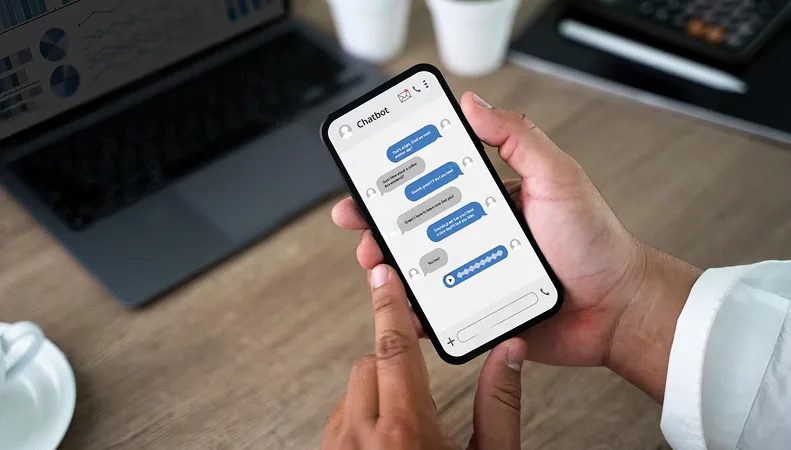
For a large part of the world, WhatsApp is simply where you reach a business. It is where customers ask about products, chase orders, and try to book appointments. Most businesses treat it like a personal inbox: messages arrive around the clock, someone answers when they get a minute, and everything sent after closing time waits until morning. By then the customer has often bought somewhere else.
A WhatsApp AI agent closes that gap. It answers every message in seconds, qualifies leads and moves them toward a sale, resolves support requests end to end, books and reschedules appointments, and recovers abandoned carts, in the customer's own language, at any hour. It runs on the official WhatsApp Business Platform API and connects to the systems your business already uses, so it acts on real data instead of reciting scripts.
This page covers who a WhatsApp AI agent is for, what it handles in production, what separates an agent that resolves from a bot that deflects, and how we build one. For the wider strategy, our guide to WhatsApp AI agents for business goes deeper on the channel itself.
Who Is a WhatsApp AI Agent For?
Any business whose customers already message on WhatsApp, or would if the number were answered. The strongest fits share one thing: high message volume with real intent behind it.
- E-commerce stores. Product questions, order status, returns, and abandoned carts all land on WhatsApp. Each one is a sale won or lost by response speed.
- Clinics and healthcare practices. Patients message to book, move, or confirm appointments, often outside office hours, and every unanswered message risks an empty slot.
- Real estate agencies. Property enquiries come in at all hours, and the first agency to respond usually gets the viewing.
- Service businesses. Salons, repair shops, tutors, travel agencies, and consultancies field the same quote and scheduling questions every day, one thumb-typed message at a time.
The common thread is a customer who wants an answer now, on the app they already have open. A phone line asks them to call during your hours. A web form asks them to wait for an email. WhatsApp is where they already are.
What Can a WhatsApp AI Agent Do?
A production WhatsApp agent is not a menu bot with canned replies. These are the six jobs it does best.
Qualify and Close Sales Leads
The agent answers product questions instantly, asks the qualifying questions your sales team would ask, shares catalogue items directly in the chat, and either completes the purchase flow or hands a warm, qualified lead to a person with the full conversation attached. Speed matters most here: the lead that messages at 11pm is buying from whoever replies first. Our guide to the WhatsApp AI agent for sales walks through this playbook in detail.
Resolve Support Tickets End to End
Connected to your order system and helpdesk, the agent looks up the actual order, checks the actual delivery status, processes the exchange or refund within the rules you set, and updates the ticket. The customer gets an answer about their situation, not a link to a policy page. We cover the full pattern in our guide to WhatsApp AI customer support.
Book and Reschedule Appointments
The agent reads live availability from your calendar or booking system, offers real slots, confirms the appointment, and sends reminders with one-tap confirm or reschedule. Customers move appointments in seconds instead of not showing up.
Recover Abandoned Carts
For customers who opted in, the agent follows up on an abandoned checkout with an approved template message, answers the question or objection that stalled the purchase, and brings the customer back to a checkout link inside the same chat.
Reply in Your Customer's Language
The agent detects the language a customer writes in and answers in it, with matched tone. One number serves every market you sell to, without a separate team per language.
Hand Off to a Human With Full Context
When a conversation needs judgment, is sensitive, or falls outside the agent's boundaries, it transfers to your team with a summary of who the customer is, what they want, and everything gathered so far. Nobody starts over, and nobody repeats themselves.
Resolution vs Deflection: What Separates a Real Agent From a FAQ Bot
Plenty of WhatsApp bots technically answer messages. They recite FAQ text, offer button menus, and the moment a question gets specific, they hand the customer a phone number or an email address. That is deflection, and customers can tell.
What makes resolution possible is integration. An agent connected to your order system can look up the delivery the customer is actually asking about. Connected to your CRM, it knows whether this is a first-time buyer or a ten-year account. Connected to your calendar, it books a real slot instead of promising a callback. The intelligence of the model matters, but the connections decide whether the conversation ends with the problem solved or with the customer redirected somewhere else.
Building those connections safely, with clear boundaries on what the agent may and may not do, is agent engineering rather than chatbot scripting. It is why we build WhatsApp agents as part of our broader AI agent development practice, with the same guardrails, evaluation, and monitoring we apply to any production agent.
Meta's Built-In Business Agent vs a Custom WhatsApp AI Agent
Meta now offers a built-in AI for business accounts, and for basics it is genuinely useful. It learns from the information on your profile and website, answers common questions like hours, location, and shipping policy, and costs nothing to turn on. If most of your WhatsApp traffic is that kind of question, start there. What it cannot do is reach into your systems: it cannot look up an order, process a refund, check calendar availability, write to your CRM, or follow your escalation rules, and it operates within Meta's platform on Meta's terms. A custom agent exists for exactly that gap. When resolution requires your data and your systems, the built-in option stops being an answer.
Proof From Production
We have shipped this pattern before, on chat channels where the stakes were high. For a U.S. crypto platform, our support chatbot cut response times by 60%, lifted CSAT to 90%, and raised first-time resolution from 45% to 82%, running 24/7 across multiple languages with full CRM context handed to human agents when needed. For Cedar Valley Health Network, our appointment booking chatbot cut patient booking time by 65%, improved booking accuracy by 80%, and lifted patient satisfaction by 75%, with HIPAA-aligned handling throughout. WhatsApp changes the channel, not the engineering underneath.
How We Build a WhatsApp AI Agent
A typical WhatsApp AI agent goes live within 4 to 6 weeks. The build sits within our AI chatbot development work and follows four stages.
Step 1: Conversation Audit and API Setup (Week 1)
We map your current WhatsApp and enquiry volume, the most common intents, and the points where messages go unanswered. We define what the agent handles, what it transfers, and what success looks like in numbers. In parallel, we set up official WhatsApp Business Platform API access, number verification, and the message templates that need Meta approval.
Step 2: Knowledge and Integrations (Weeks 2-3)
We ground the agent in your actual business using retrieval-augmented generation over your policies, catalogue, and help content, so it answers from your facts rather than general knowledge. Then we connect the systems that make resolution possible: your order platform, CRM, calendar or booking system, and helpdesk.
Step 3: Testing and Parallel Run (Weeks 4-5)
We test against real conversation scenarios, edge cases, and every handoff rule, then run the agent in parallel with your team so accuracy and escalation behavior are proven before it talks to customers alone.
Step 4: Go-Live and 30-Day Optimization (Week 6 Onward)
The agent goes live, and we monitor resolution rates, handoff rates, and conversation quality, tuning flows for 30 days so performance keeps improving after launch.
Conclusion
WhatsApp is the one channel where your customers expect a reply in minutes and will happily complete an entire purchase, booking, or support request without ever leaving the chat. Leaving it to a shared inbox wastes that. A WhatsApp AI agent built on the official Business Platform API, grounded in your data, and wired into your order system, CRM, and calendar turns the channel into something closer to your best employee: always available, always informed, and honest about when a human should take over.
Bitontree builds and ships WhatsApp AI agents tailored to how your business runs. We handle the API setup, the integrations, the guardrails, and the monitoring, and we go live within 4 to 6 weeks with a 30-day optimization period included. If enquiries are piling up on WhatsApp while your team sleeps, that is a fixable problem.
Frequently Asked Questions
Do I need the WhatsApp Business API to run an AI agent?

Yes. The regular WhatsApp app and the free Business app do not support this level of automation. An AI agent runs on the official WhatsApp Business Platform API, accessed through a Meta business solution provider. We handle the setup, number registration, business verification, and template approvals as part of the build.
Will automating WhatsApp get my number banned?
Not if it is done properly. Bans happen to businesses using unofficial libraries or sending unsolicited bulk messages. A properly built agent runs on the official Business Platform API, messages only customers who opted in, respects the 24-hour customer service window, and uses Meta-approved templates outside it. That keeps the number compliant with WhatsApp's business messaging policy.
What is the difference between Meta's built-in AI and a custom WhatsApp agent?
Meta's built-in business AI answers common questions from your public profile and website information, and it is free. It cannot access your systems, so it cannot look up an order, issue a refund, book an appointment, or update your CRM. A custom agent connects to those systems and resolves the request instead of just describing your policy.
What systems can a WhatsApp AI agent connect to?
Anything with an API. Common integrations include e-commerce platforms like Shopify and WooCommerce, CRMs like Salesforce and HubSpot, calendars and booking systems, helpdesks like Zendesk and Freshdesk, and internal order or inventory systems. These connections are what let the agent resolve requests rather than deflect them.
What languages can the agent support?
The agent detects the language a customer writes in and replies in that language with a matched tone, across dozens of languages. One WhatsApp number can serve every market you operate in, which matters on a channel used heavily across Asia, Latin America, Europe, Africa, and the Middle East.
How long does it take to go live?
A typical WhatsApp AI agent goes live within 4 to 6 weeks. That includes WhatsApp Business Platform API setup and verification, grounding the agent in your policies and catalogue, system integrations, template approvals, testing with a parallel run, and a 30-day optimization period after launch.
Can clinics use a WhatsApp AI agent, and how is patient data handled?
Yes, clinics are one of the strongest fits, mainly for appointment booking, reminders, and general enquiries. We build with HIPAA-aware handling: the agent keeps protected health information out of the WhatsApp thread wherever required, moves sensitive steps into secure systems, logs every interaction for audit, and runs backend infrastructure that supports a Business Associate Agreement.
Can the agent hand a conversation to a human?
Yes, and it should. The agent transfers conversations that need judgment, are sensitive, or fall outside its boundaries, and it passes along a summary of the customer, the request, and everything gathered so far. Your team picks up mid-conversation with full context instead of starting from zero.
Proof and Related Work

AI Chatbot for Crypto Customer Support
A support chatbot for a U.S. crypto platform cut response times by 60%, lifted CSAT to 90%, and raised first-time resolution from 45% to 82%, running 24/7 in multiple languages.
Appointment Booking AI Chatbot for Healthcare
Cedar Valley Health Network cut patient booking time by 65%, improved booking accuracy by 80%, and lifted patient satisfaction by 75%, with HIPAA-aligned handling throughout.
AI Chatbot for Appointment Booking
Build an AI chatbot that books, confirms, and reschedules appointments across web, SMS, and WhatsApp. Integrates with your calendar or CRM. Cut no-shows fast.