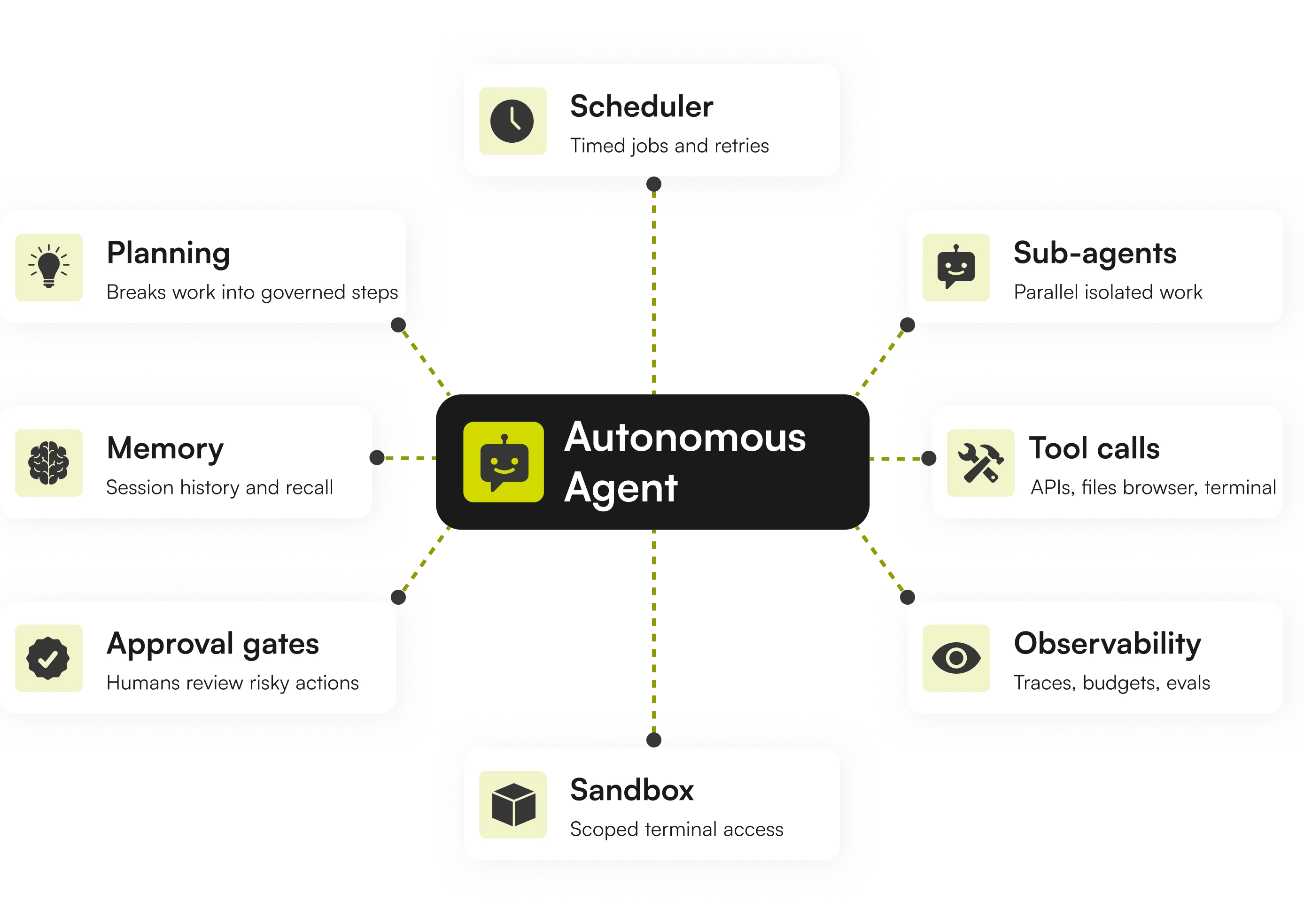
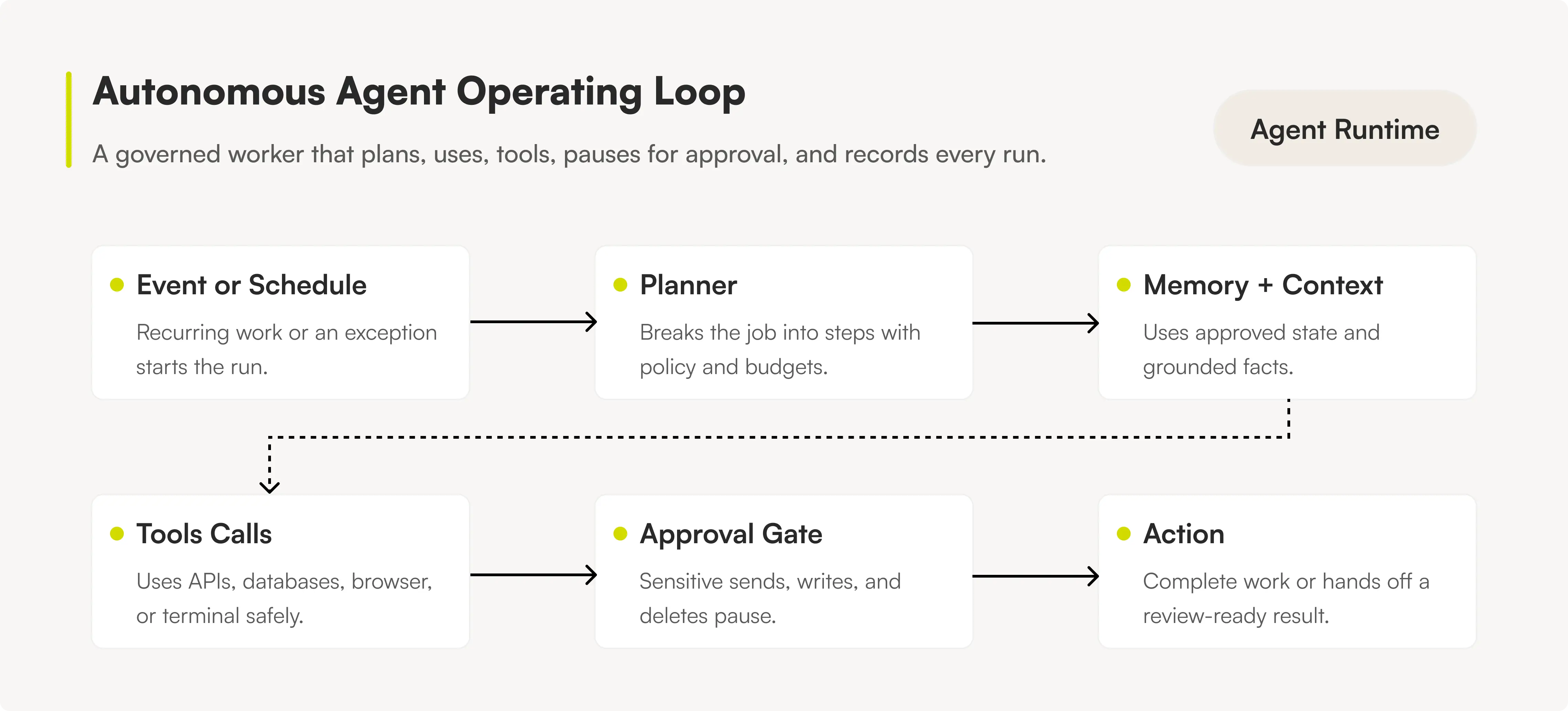
Yes on both. Running unattended on a schedule is the whole point of an autonomous agent, and it is also where governance matters most.
Runtimes like OpenClaw and Hermes Agent include a cron-style scheduler so an agent can fire overnight or on an interval, work through a multi-step job, and report results with no human triggering each run. The risk is that an unattended agent fails the same way every cycle, or loops and burns budget, with nobody watching, so scheduled work needs per-run budgets, loop detection, anomaly alerting, and approval gates on any irreversible step. We have built this kind of always-on system in production, including a nightly medication-adherence voice workflow, so these patterns are not theoretical.
We embed senior AI engineers to build the agent and then stay to run it: monitoring, incident response, upgrades behind re-run evals, and review of what a self-improving agent has taught itself. If you have an internal team, we hand off with runbooks, dashboards, and the eval suite. What we will not do is build it, hand you the keys, and walk away.